8 stopsabout 3 weekshotels for every budgetfree PDF
This is the offline version of travelrached.com/guides/china. The links still work, tap them to book.
Hi, I'm Rached. I've spent more than six months in China over four trips, in big cities and in tiny mountain villages. This is the route I'd do if I went back tomorrow, in the right order, with my mistakes taken out.
It goes roughly from west to east, so you never go back on yourself, and it ends in Shanghai on purpose. Most flights home leave from Shanghai, and it's where you'll do the most shopping, so better at the end than carrying it for three weeks. If you land in Shanghai, just do it the other way round.
Chengdu is known for the pandas, but there's a lot more to it. It's cute and very chill, people here really take their time. Add great, spicy Sichuan food, and it's a nice, easy start to the trip.
The Chengdu panda base.
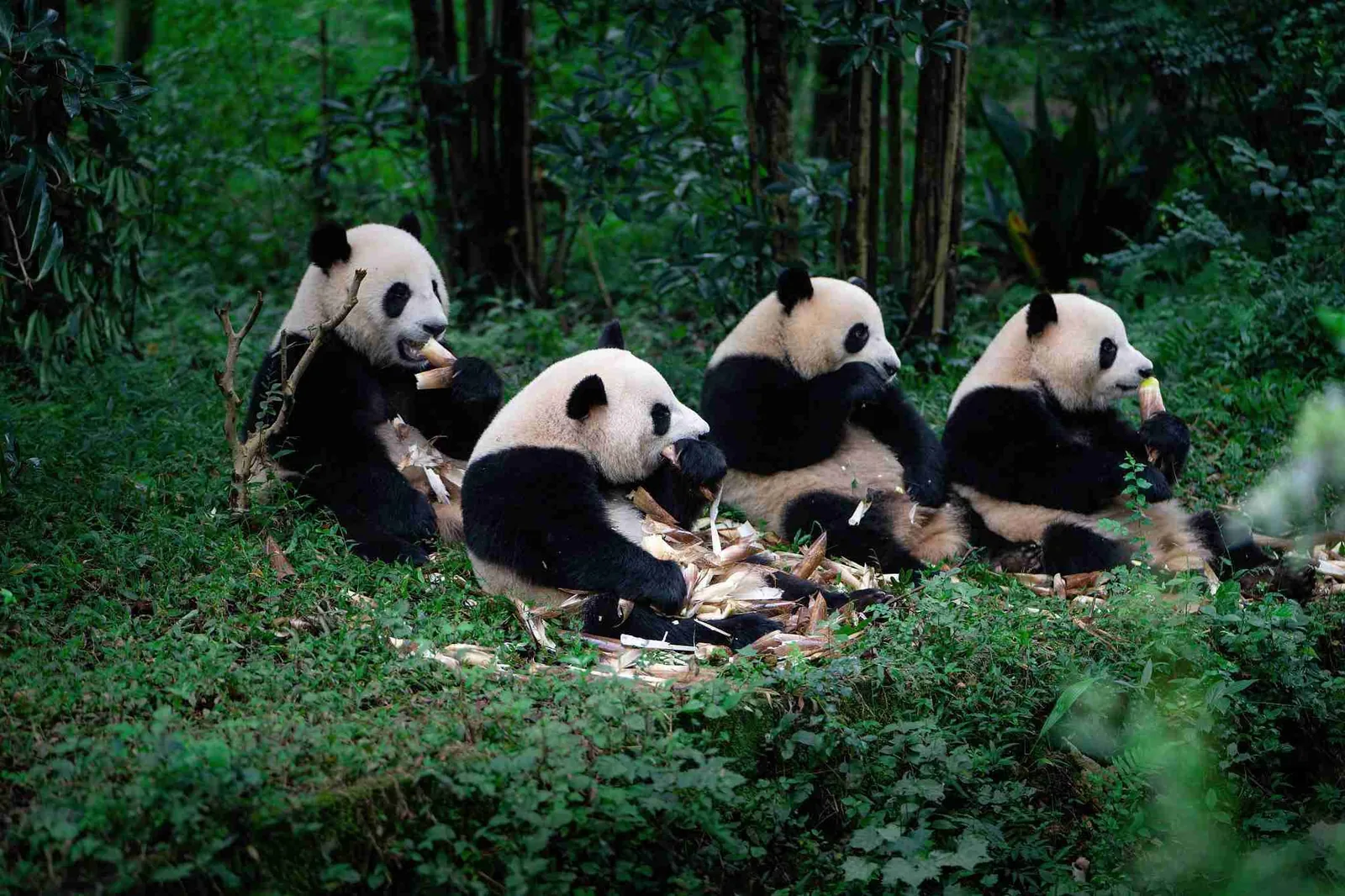
The pandas. Go to the Chengdu Research Base right when it opens, at 7:30 (8:00 in winter). Once it gets hot, the pandas go inside. Tickets →🌅 at opening⏱ 2 to 3h
People's Park in the afternoon. People dance everywhere, there's a bonsai garden, and at the Heming teahouse they pour your tea from a teapot with a one-meter spout. It's a whole show.☀️ afternoon⏱ 2h
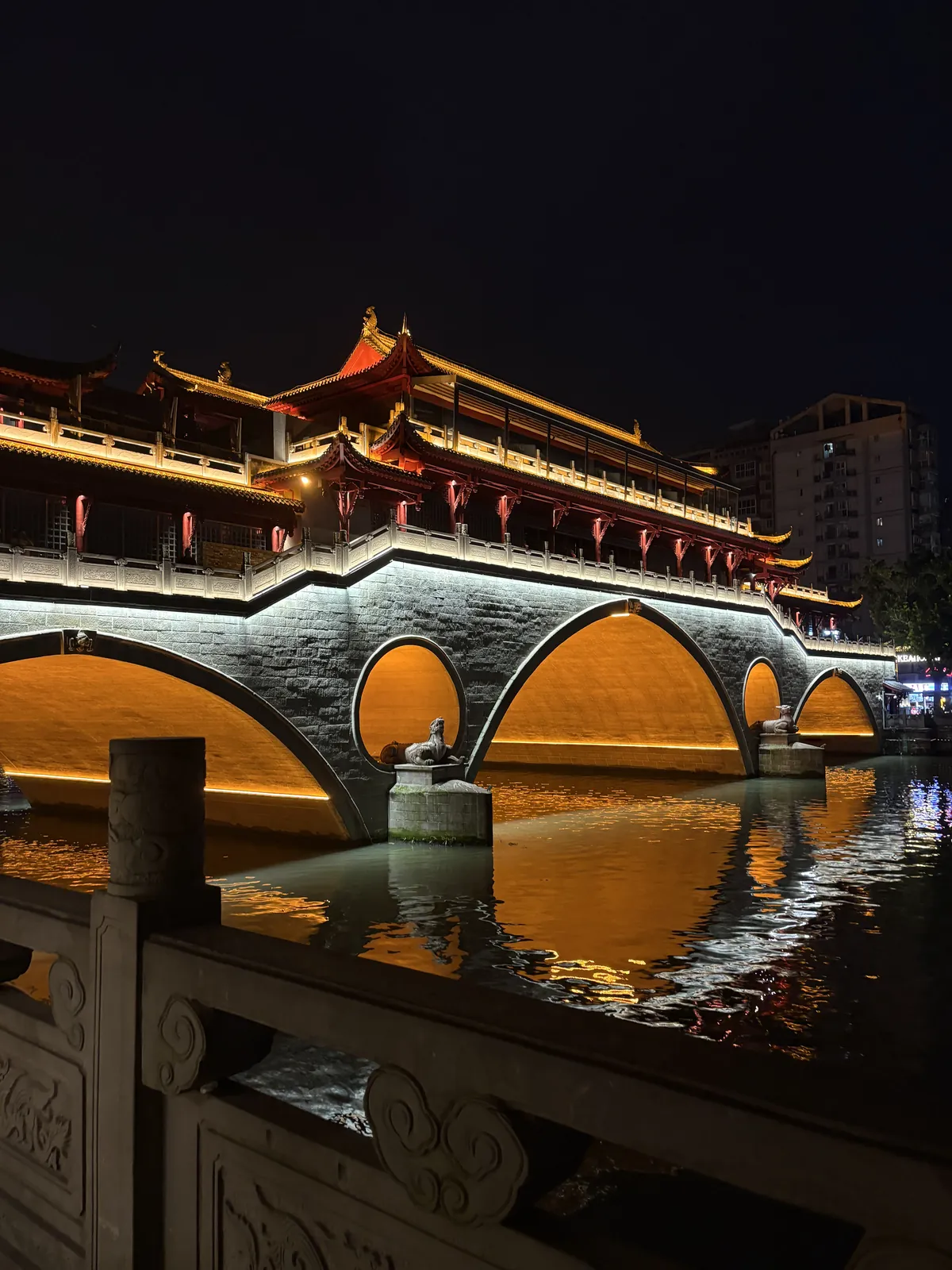
Anshun Bridge at night, all lit up over the river. The best photo is from the riverbank.🌙 at night
Eat street food, and a bowl at Yao Guai Mian, a noodle shop recommended by the Michelin guide where a bowl costs a few dollars.
Chongqing is the incredible cyberpunk city. Skyscrapers are stacked on the hills, and there's neon everywhere at night. The first time you see it, it's hard to believe it's real. To be honest, it's also a bit chaotic, some spots get very crowded, and it's not the most chill stop of the trip.
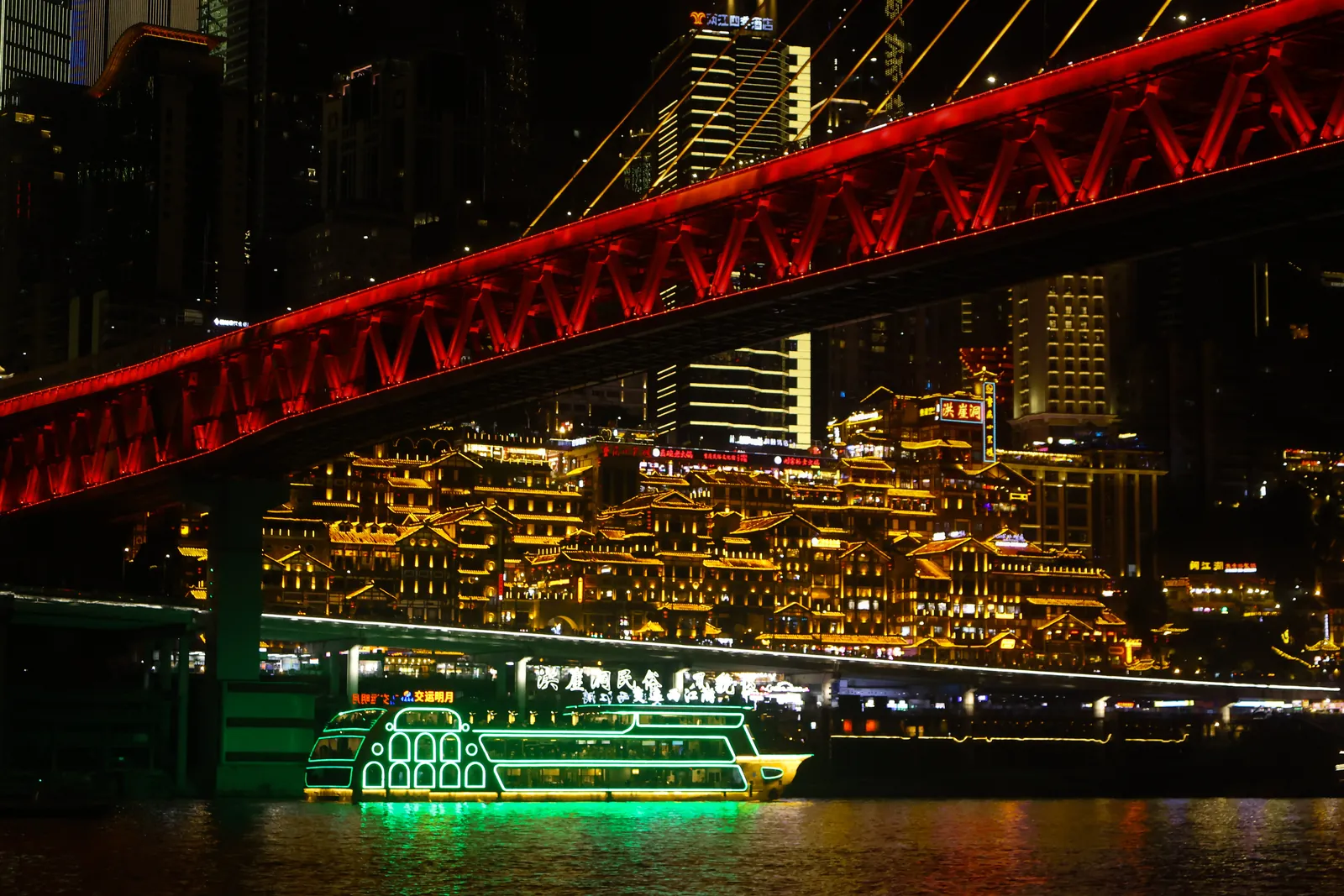
Hongyadong from under Qiansimen Bridge, about 20 minutes after sunset.
At night
Hongyadong after dark, the yellow building stacked on the cliff. It's packed, but worth it. Then walk under the red bridge for the photo above. 🌙 after dark⏱ 1h
The Skywalk at Raffles City. They put you in a harness and you walk outside with your feet in the void, about 250 m up. My favourite, it's really impressive. Tickets →🌙 at night⏱ 1h
The WFC observation deck is the highest viewpoint in the city. On a smaller budget, it's the better pick just for the view. Tickets →🌆 sunset or night⏱ 1h
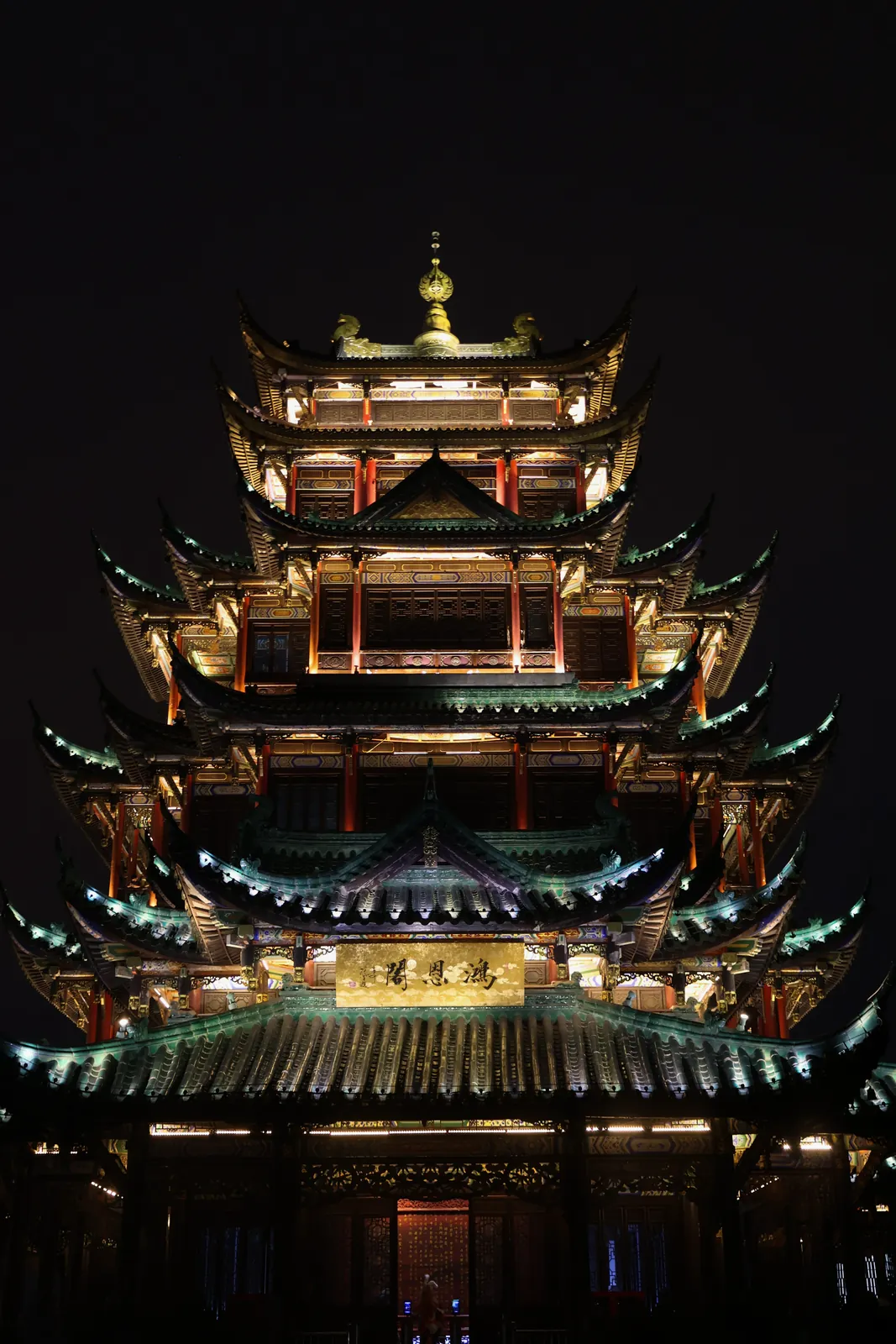
Hong'en Pavilion, lit up on a hill. You see the whole city from there.🌙 at night⏱ 1h
By day
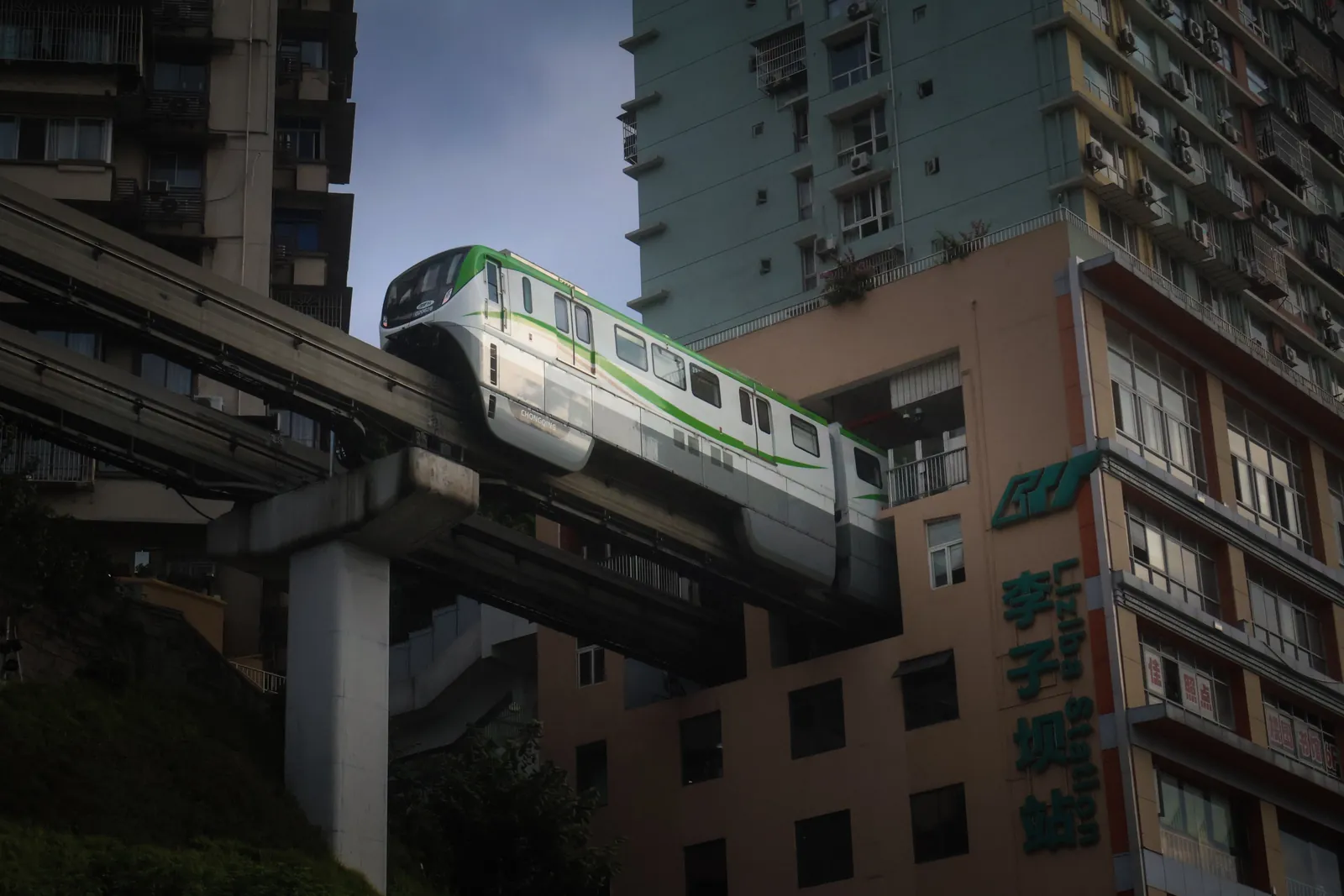
Liziba, the train that goes through a building. Stand on the platform below and wait, one passes every few minutes. A must-see. ⏱ 20 min
The Yangtze River Cableway, a 5-minute cable car right over the river. Book a time slot before you go, without one the queue can take two hours. 🎟 book a slot⏱ 5 min ride
Luohan Temple, almost 1,000 years old and stuck between skyscrapers.⏱ 30 min
Ciqikou, the old town, in the afternoon. Then go see Chongqing·1949 right across the creek, a show where the seats spin 360°. Book section A or B, the others don't move. ☀️ afternoon⏱ half a day
To eat
Pea noodles (wanza mian) from a street stall for lunch, and hot pot at least once for dinner. It's spicier than in Chengdu.
Hong'en PavilionThe Skywalk at Raffles CityThe WFC deckLiziba
Bring good shoes, it's stairs and hills everywhere. And in summer it's 35°C+, one more reason to live at night.
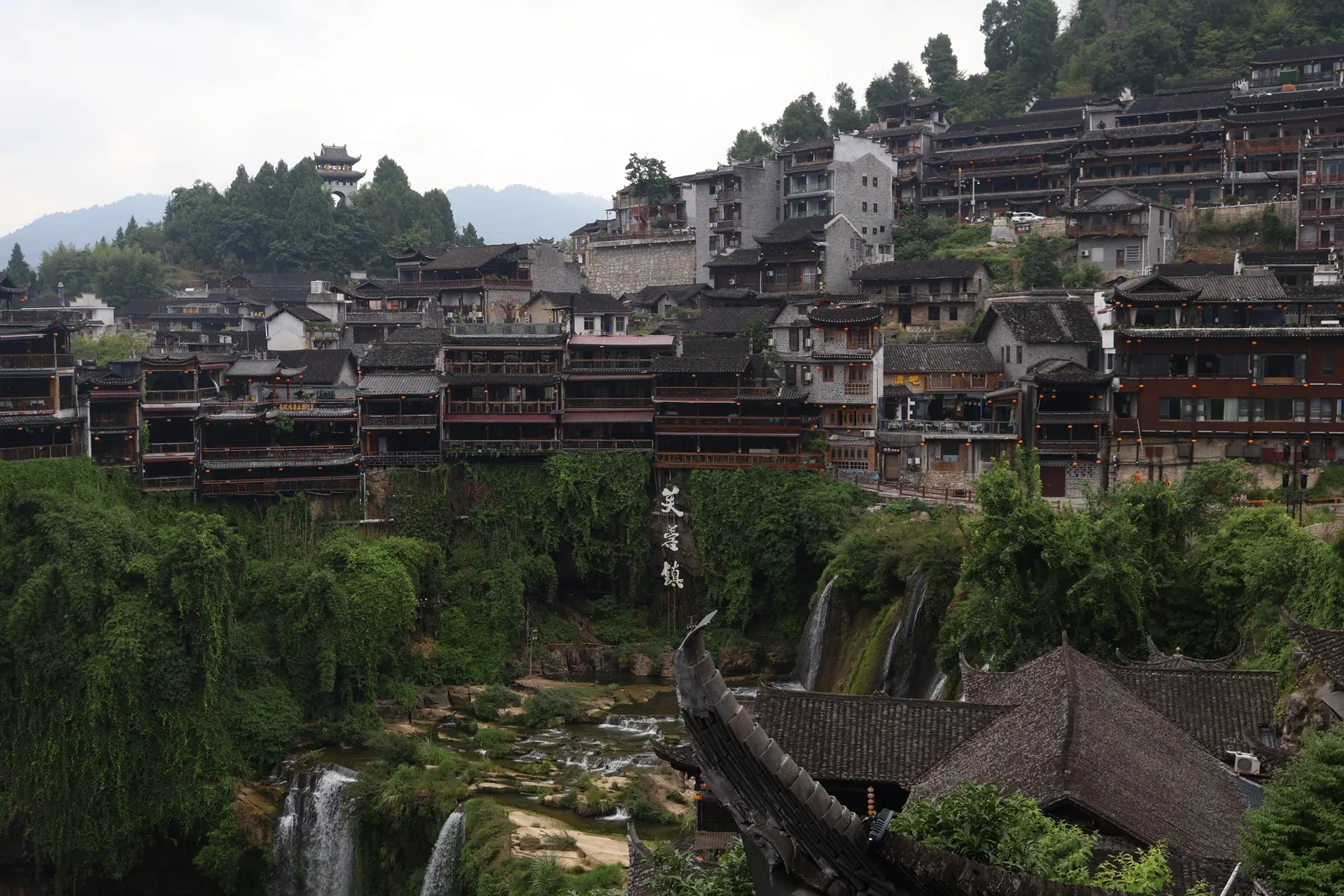
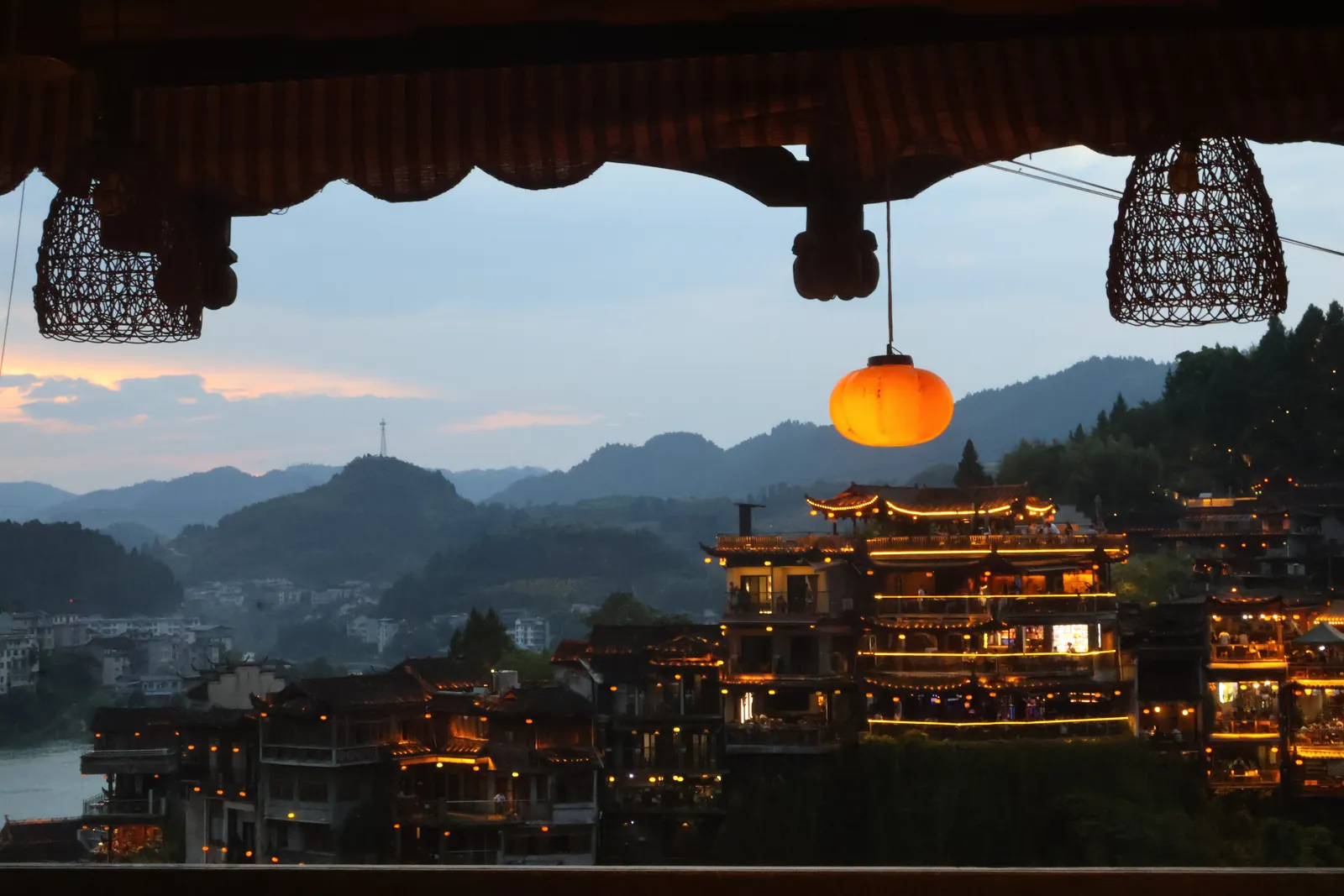
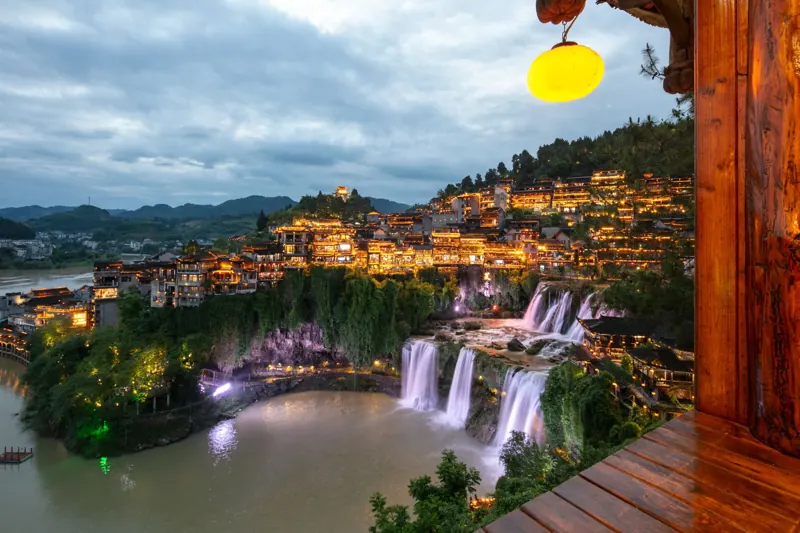
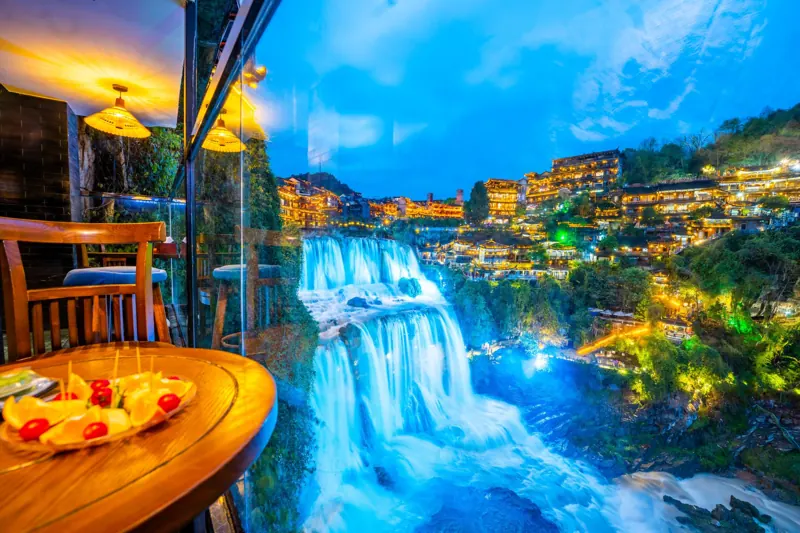
Two pretty traditional villages, 40 minutes apart by train. Fenghuang is the cute old town on the river, perfect to walk around for a day. Furong is built on a waterfall, and it's the place that impressed me the most. Honestly, I've never seen anything as beautiful as the view at night. So walk Fenghuang by day, and sleep in Furong.
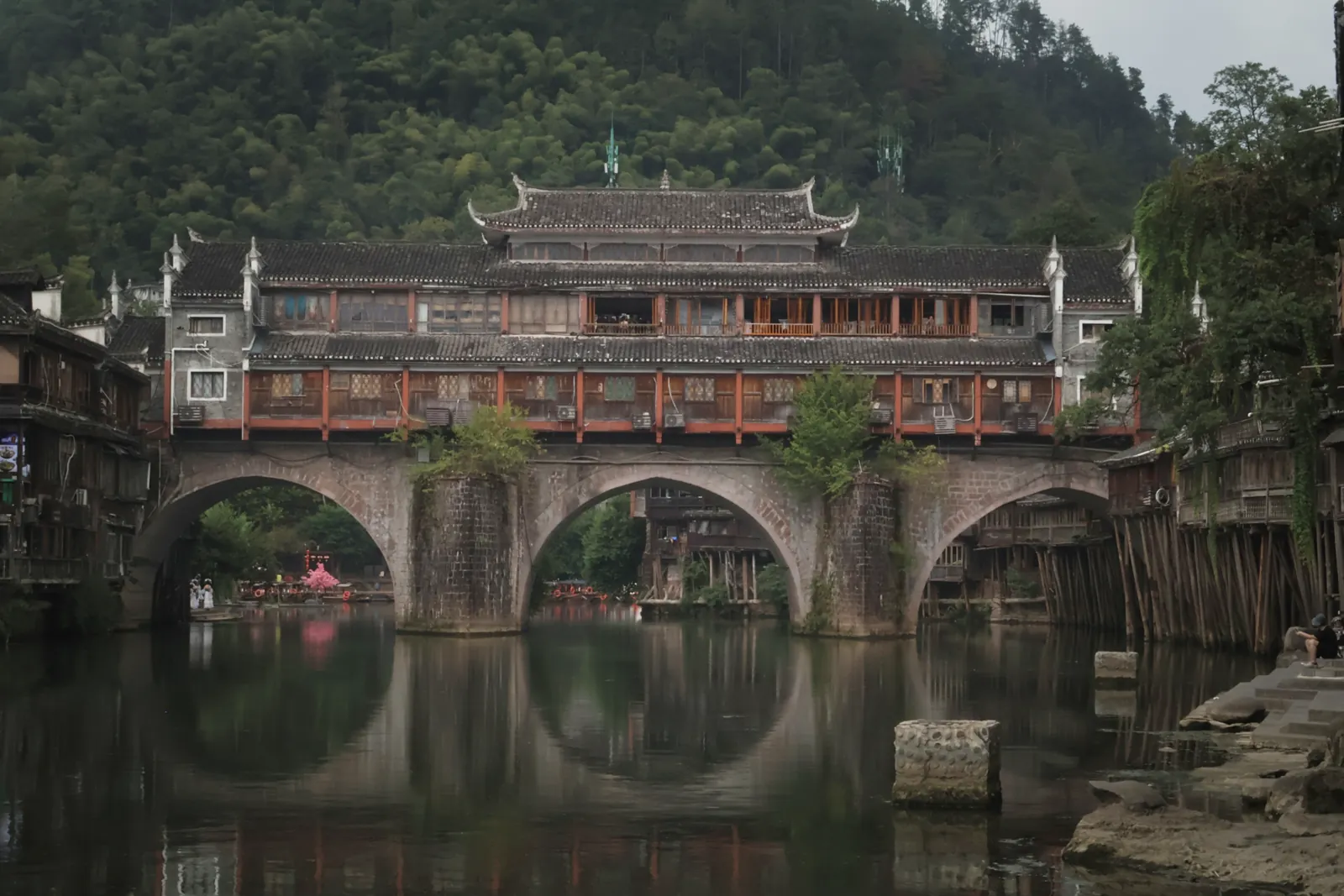
The covered bridge in Fenghuang.
Fenghuang, by day
Expect pretty bridges, wooden houses on stilts, and lots of people in traditional outfits (you can rent one for photos). You can even walk across the water on the stepping stones.
It's pretty calm most of the time, so just wander. Avoid Chinese holidays, that's when it gets crowded. Half a day is plenty, then take the 40-minute train to Furong before dark. There aren't many of them, so book it early. Trains →
The high-speed station is about 10 km from the old town, so count 20 minutes by taxi or Didi each way.
If you'd rather sleep in Fenghuang anyway, this inn and this one both have river-view balconies.
Fenghuang, along the river.
Then Furong:
The waterfall lights up after sunset. The 20 minutes right after are the best, and you want to be on your balcony for that. 🌙 after sunset
You can walk behind the waterfall. Yes, really. It's slippery, so wear real shoes.⏱ 30 min
Music and dance shows in the evening. They come with the village ticket, about ¥100 ($14).🌙 evening
There isn't much else to do, and that's fine. It's a place you come to look at.
Next morning, walk the village before 9. After that, the tour buses arrive.🌅 before 9
Furong by dayFurong after sunset
Pack light for these two days. It's stairs everywhere.
Where to sleep
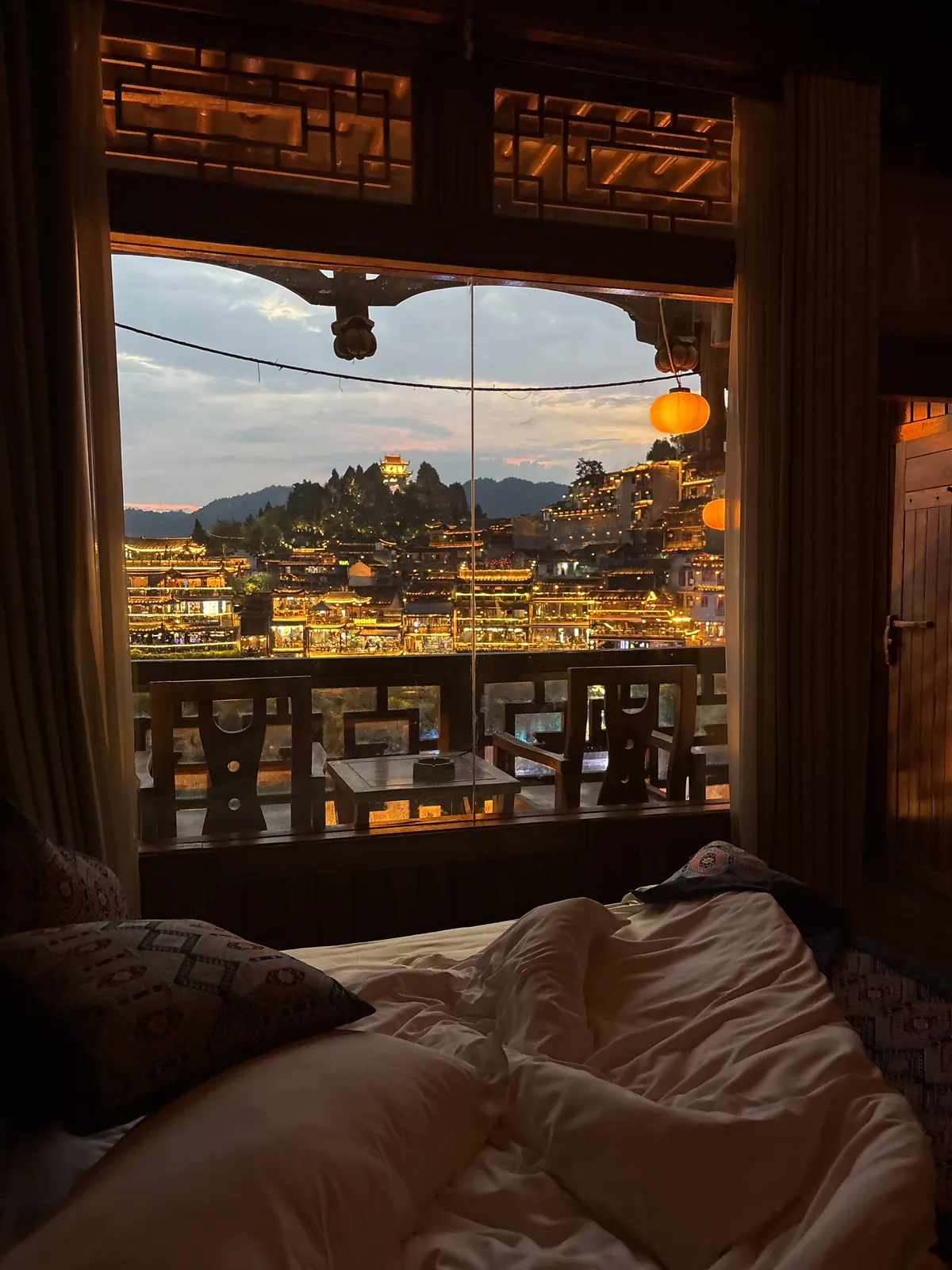
The view from my room
Mine wasn't the fanciest hotel in town, but it has literally the best view of the whole village, right on the waterfall. It's a bit hidden, so you'll drag your bags through the alleys for a few minutes. Worth it.
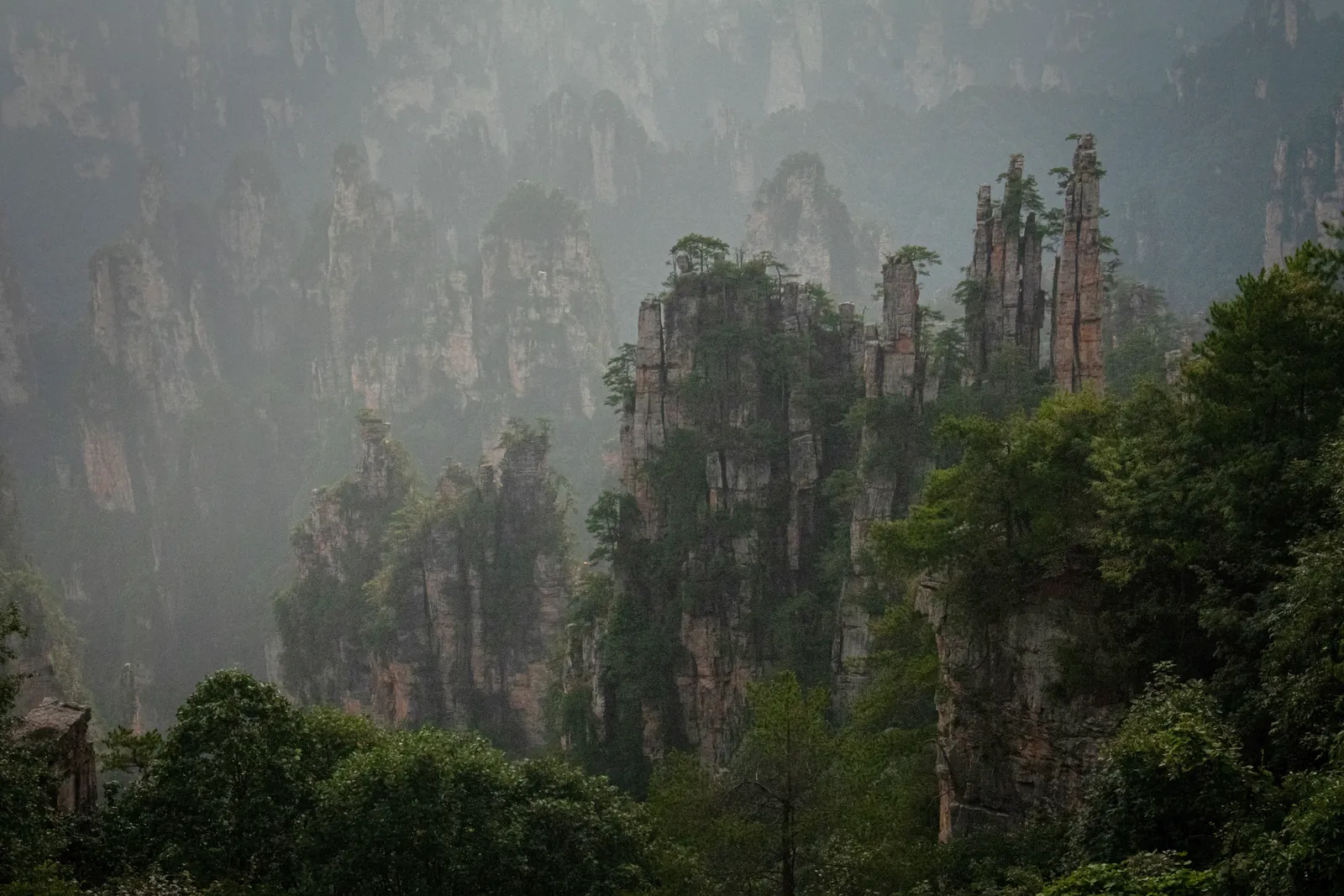
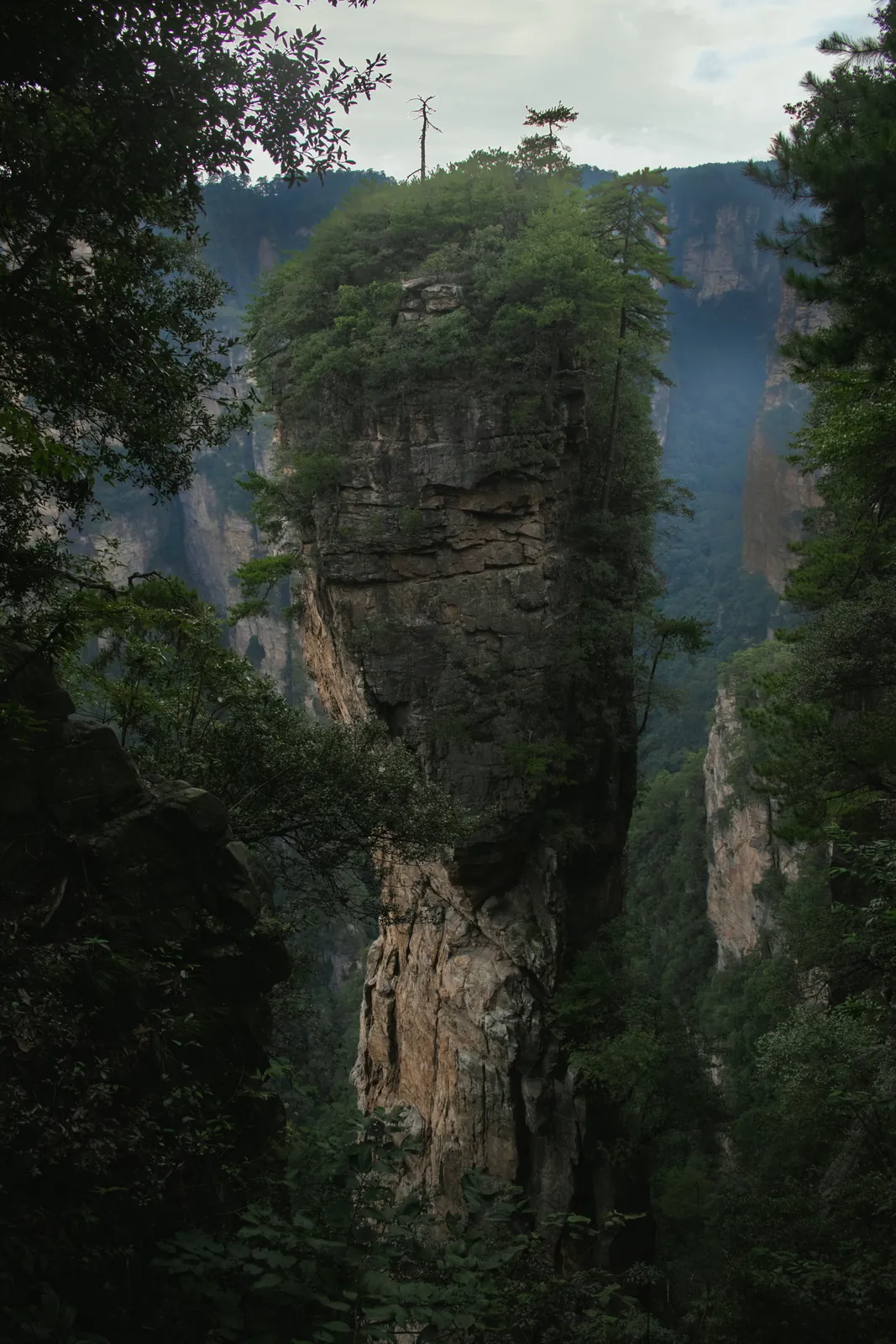
These are the Avatar mountains, thousands of stone pillars rising out of the forest, often in the mist. In real life they're even bigger than in the photos. Give the park at least 3 days, every viewpoint is different.
The Avatar pillars, in the national park.
In the order I'd do it:
The glass bridge over the Grand Canyon, first. It's a separate ticket with a time slot, and it sells out, so book a few days before. Tickets →🎟 book days ahead⏱ 3 to 4h
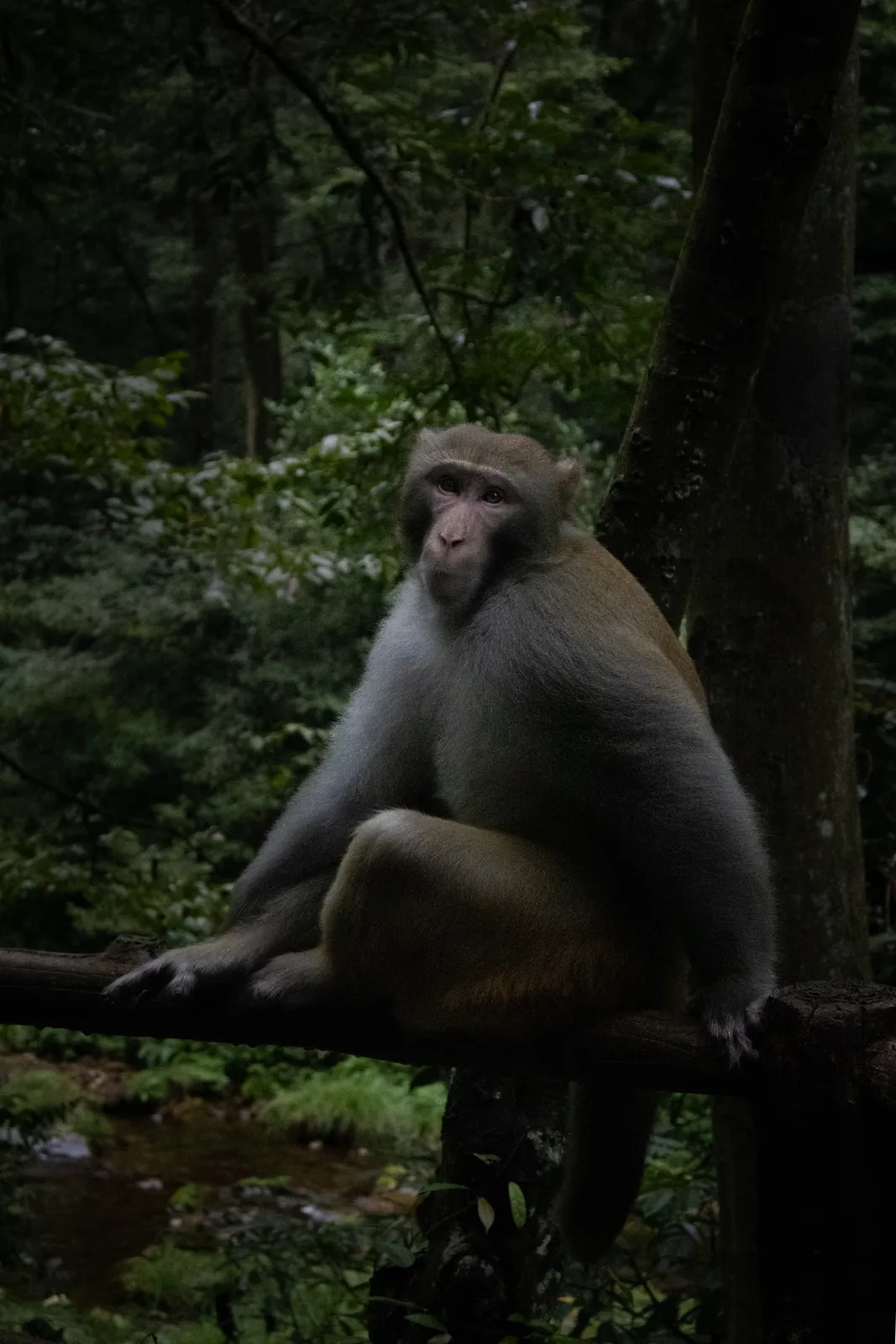
The national park, over 2 or 3 days. Cable cars, the Avatar pillars, and Golden Whip Stream, a flat walk along the river full of monkeys. Hide your snacks. Tickets →⏱ 2 to 3 days
The park ticket is valid 4 days, but you reserve each visit. Bring your real passport, not a photo of it, the gates check it and scan your face.
Sunset in the park. Stay for it and take the last bus down, but check what time it leaves before you go up. I almost got stuck up there.🌇 sunset
Bailong Elevator, one of the highest outdoor elevators in the world: 326 m straight up the cliff. Totally worth it.
72 Wonders (七十二奇楼) at night, the colorful building that lights up. There's a show with police officers dancing, it's hilarious. Tickets cost more after 4:30 pm, or just take the photo from across the road.🌙 at night⏱ 1h
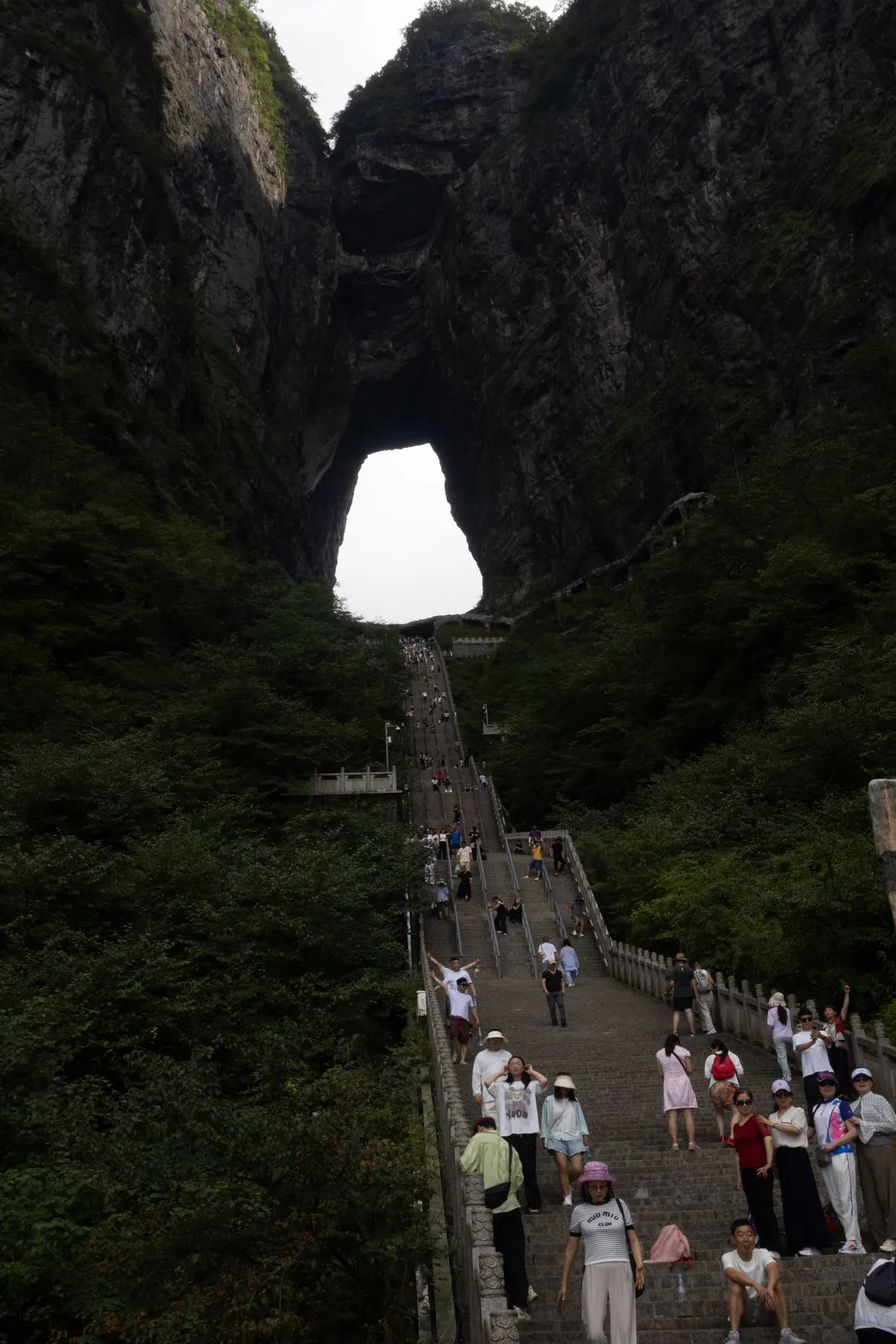
Tianmen Mountain, the "gate to heaven", about 40 min from Wulingyuan. Go at opening and book a time slot. Tickets →🌅 at opening⏱ half a day
Good to know: the long cable car from the city is closed for works, with no reopening date yet. For now you go up with the express cable car from the mountain gate to Tianmen Cave, then escalators to the top.
One of the Avatar pillars72 Wonders, the dancing policeGolden Whip StreamThe gate to heaven
Go in early September, right when school starts again in China. The park is almost empty. And skip the glass bridge on a windy or rainy day, it closes.
The capital, and the big history stop of the trip. The Forbidden City and the Great Wall are the two things you can't skip, and the Forbidden City sells out, so book it before you arrive. The rest of the time, get lost in the hutongs, the old lanes where people still live.
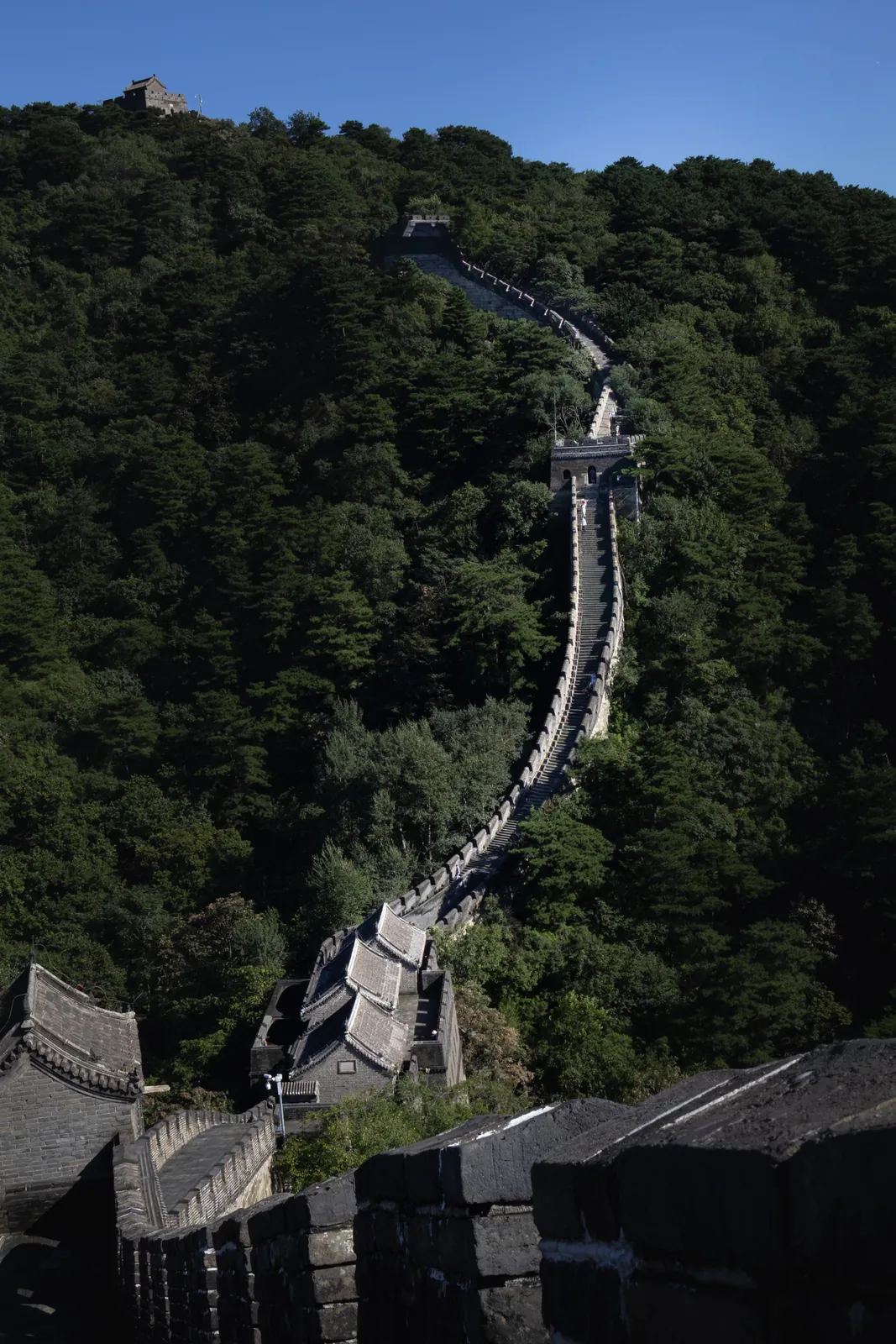
Mutianyu, the section with the toboggan.
The Forbidden City. Tickets open at 8 pm Beijing time, exactly 7 days before, and they go fast. It's closed on Mondays. Bring the passport you booked with. 🎟 book 7 days before⏱ 3h
Right after, climb Jingshan Park across the street. It costs almost nothing, and you see all the golden roofs of the Forbidden City from above.⏱ 30 min
The Great Wall at Mutianyu. Take the chairlift up and come down on the toboggan. Do it, seriously. It's about 1h30 from the city, so leave early. Day trip →🌅 leave early⏱ full day
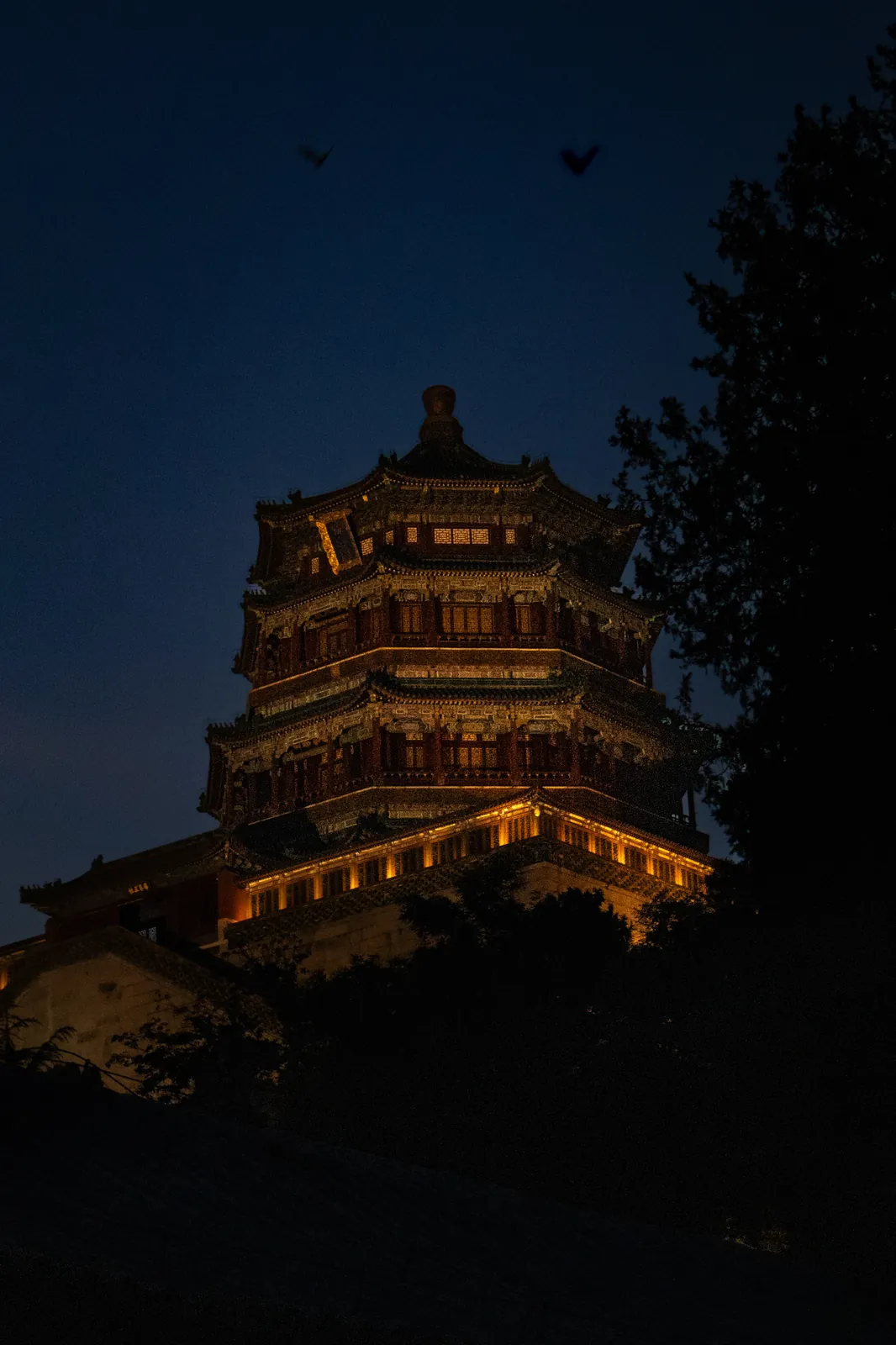
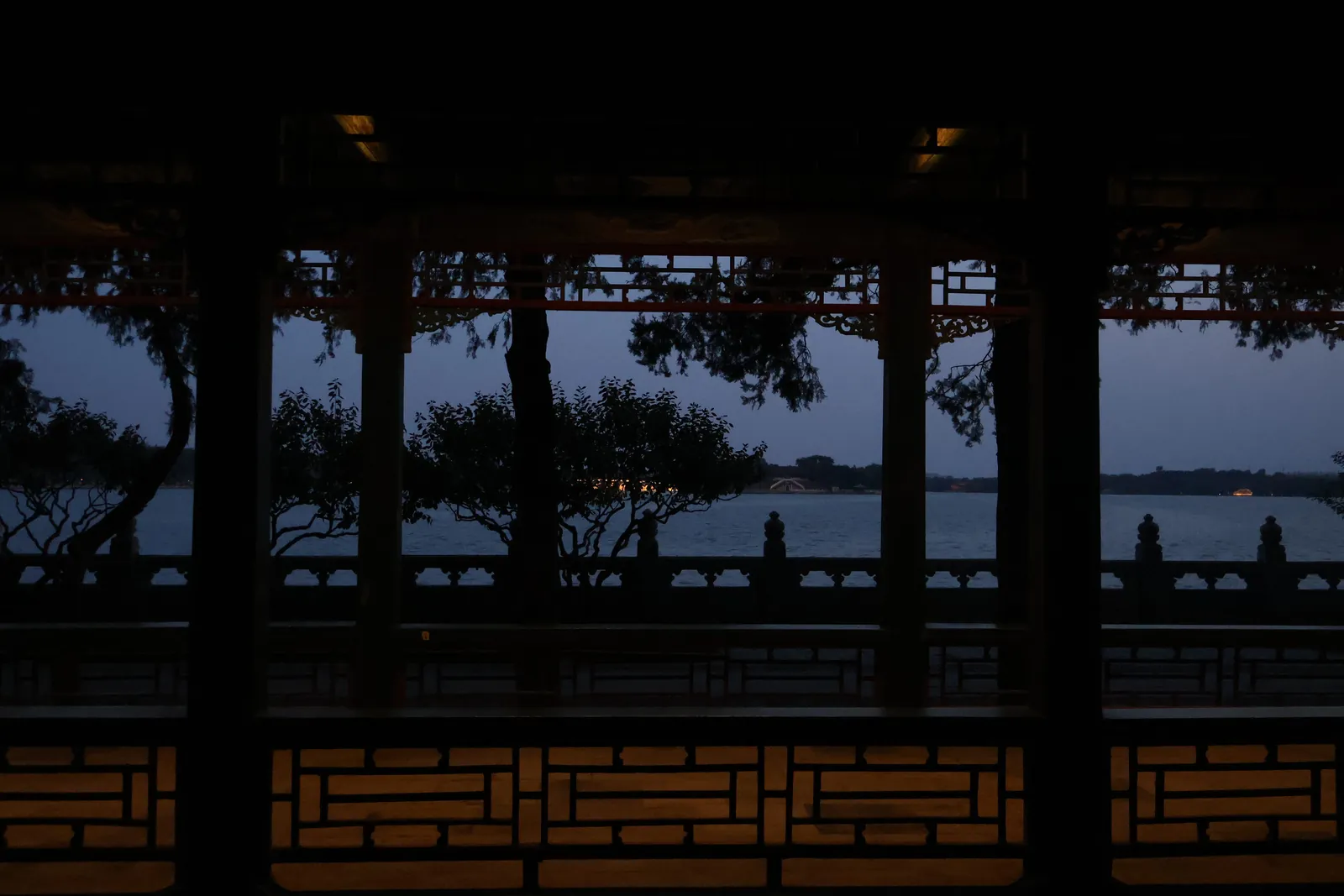
The Summer Palace, the emperors' garden on a lake. Cute, beautiful gardens, and not crowded at all. ⏱ 2 to 3h
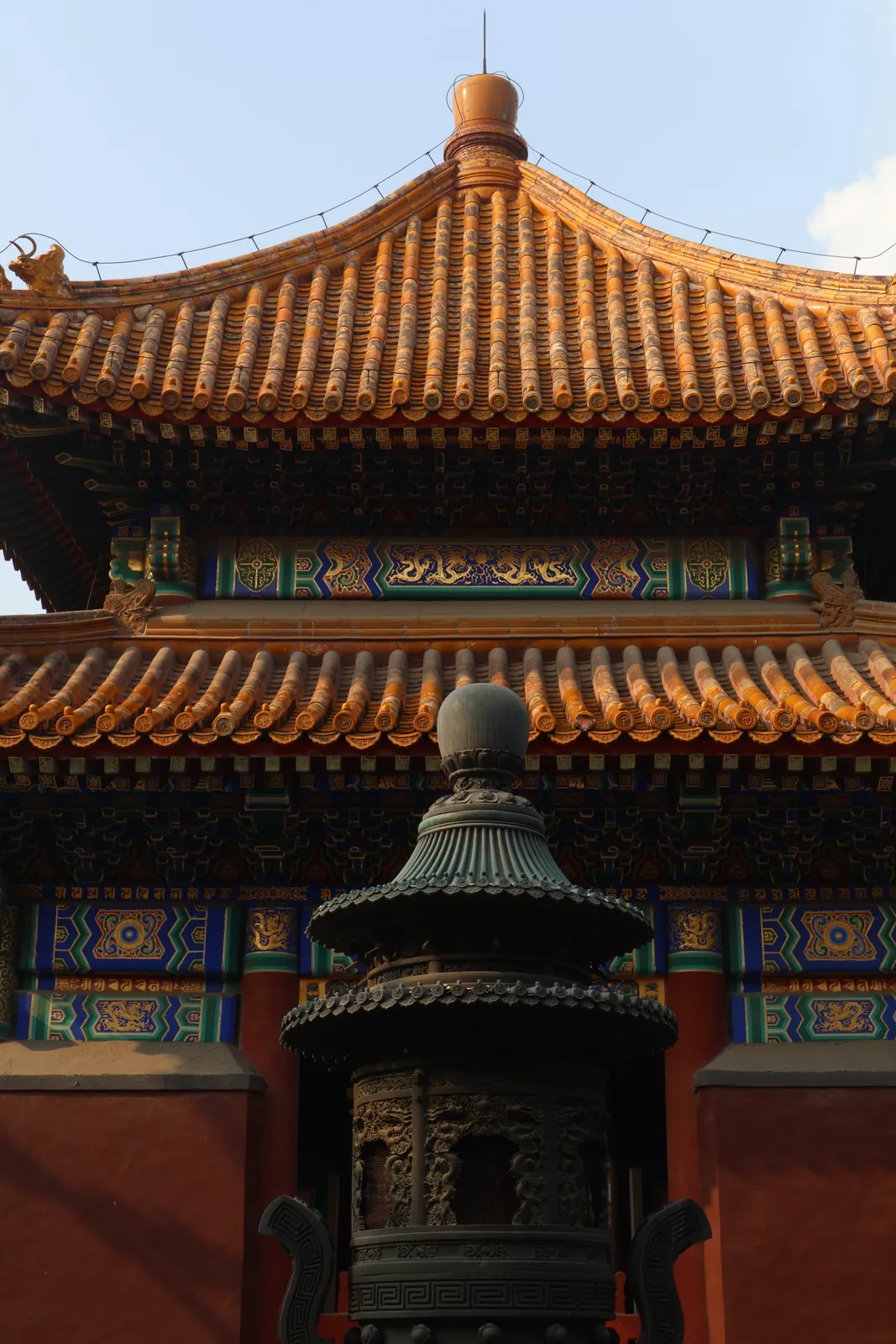
The Temple of Heaven. Go early, when locals do tai chi in the park around it.🌅 early⏱ 1 to 2h
The hutongs, the old lanes around Nanluoguxiang and the Drum Tower. Get lost in them on foot or by bike.⏱ 2h
After Beijing, Hangzhou feels calm. The city is built around a big lake with tea fields on the hills, and it's also home to the green lake everyone's posting. Take it slow, it's made for that.
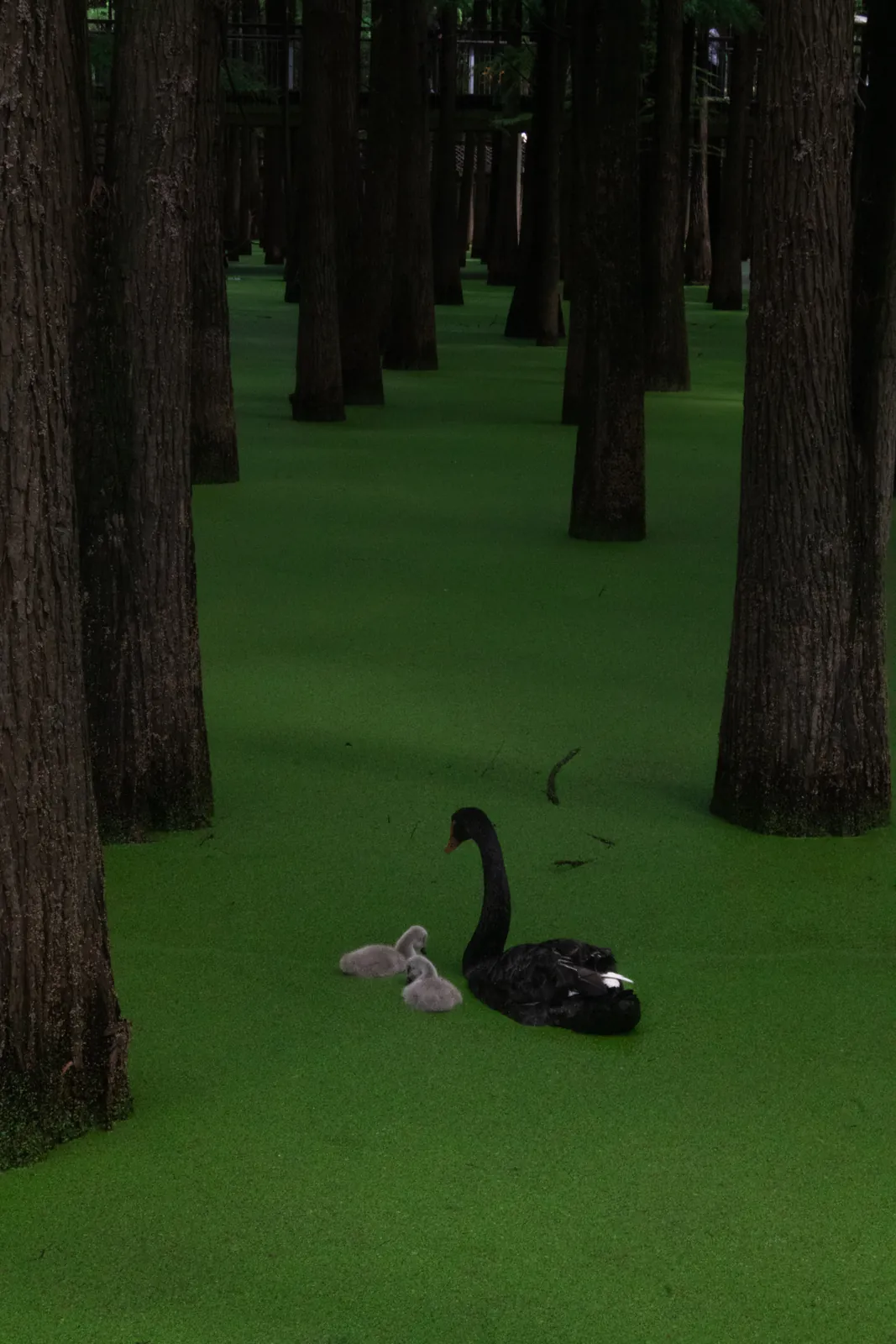
Qingshan Lake. The color is real.
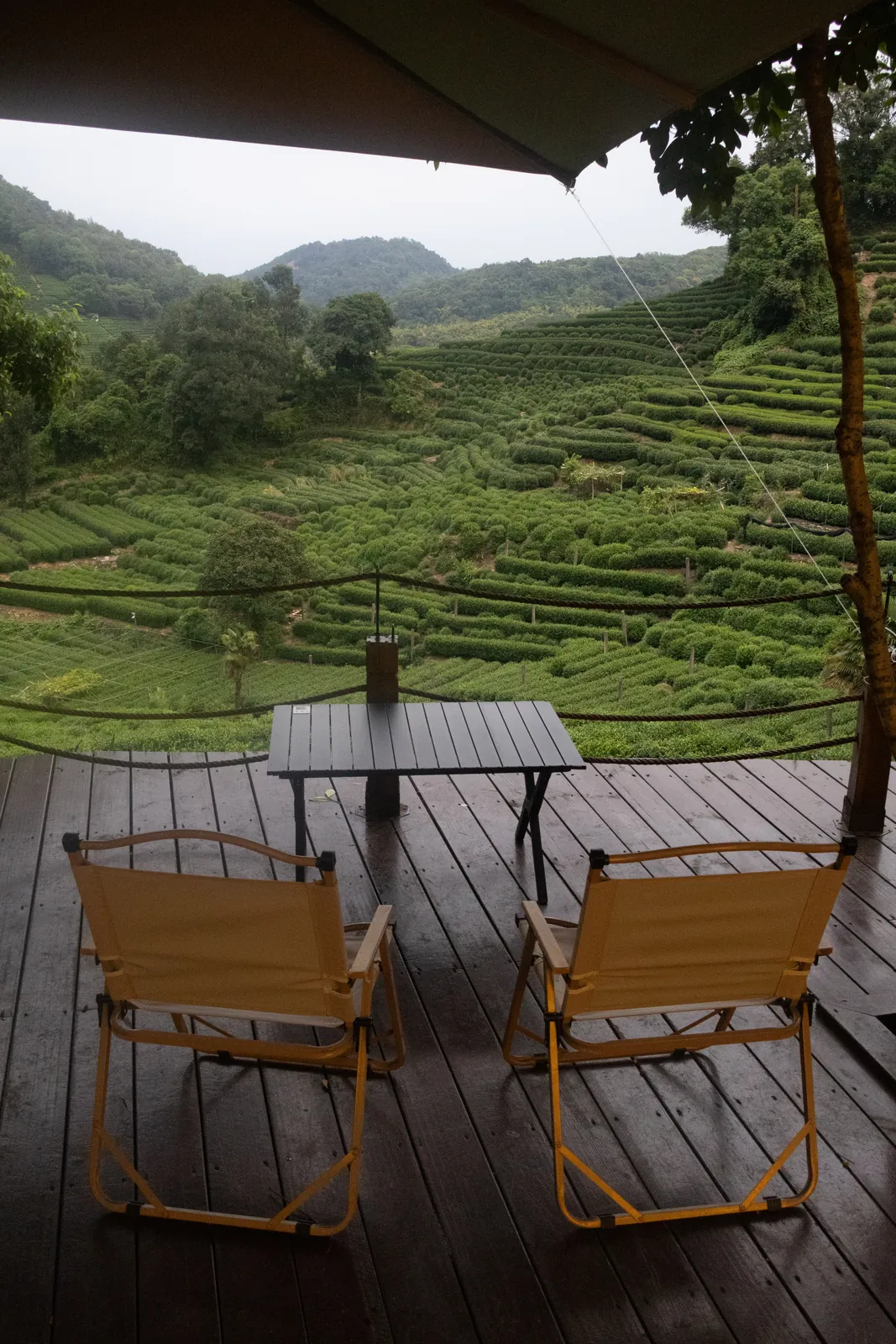
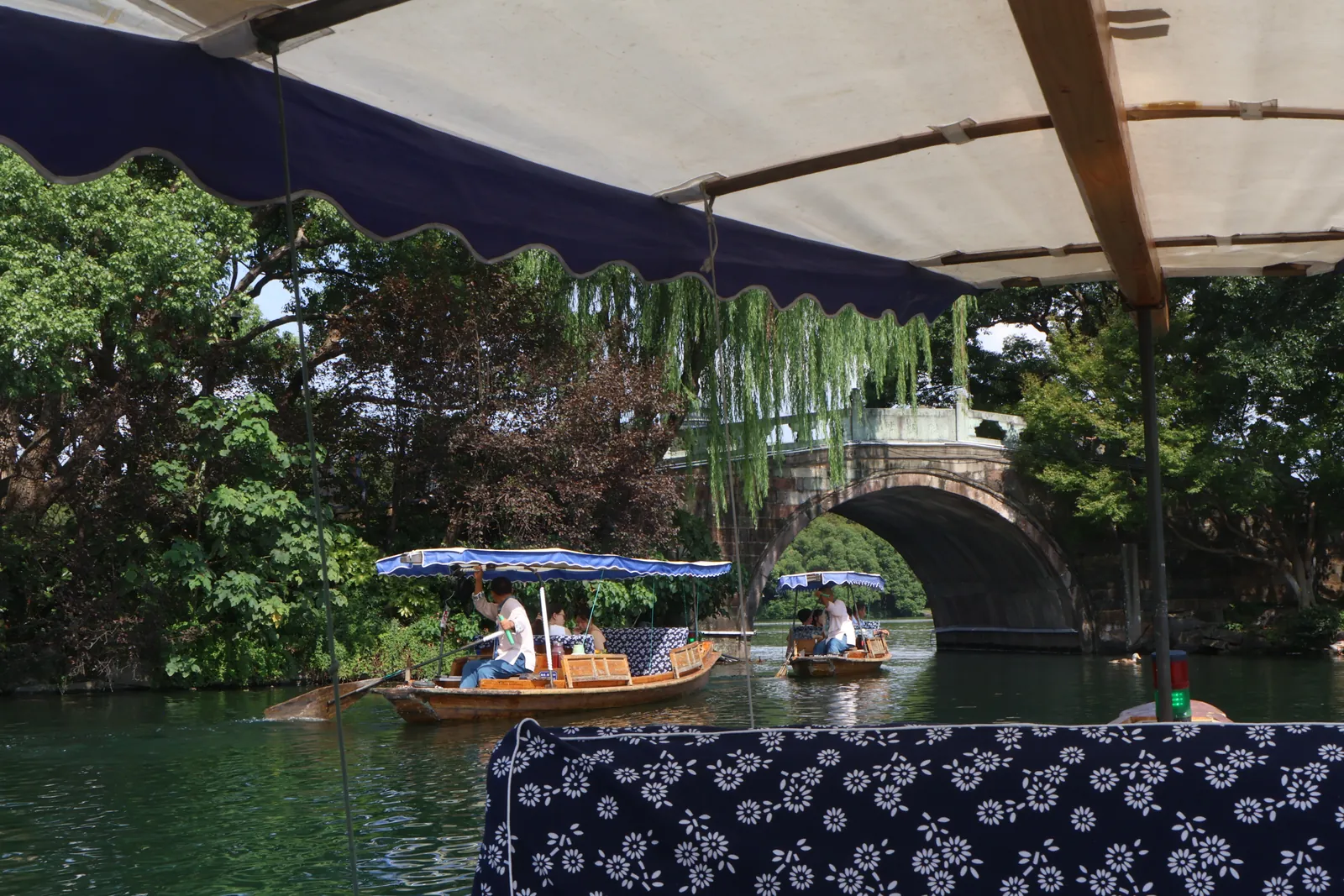
Day 1: a boat on West Lake, then the Longjing tea fields. Stop for a coffee at Longjing 82, a café right in the middle of the tea. ⏱ full day
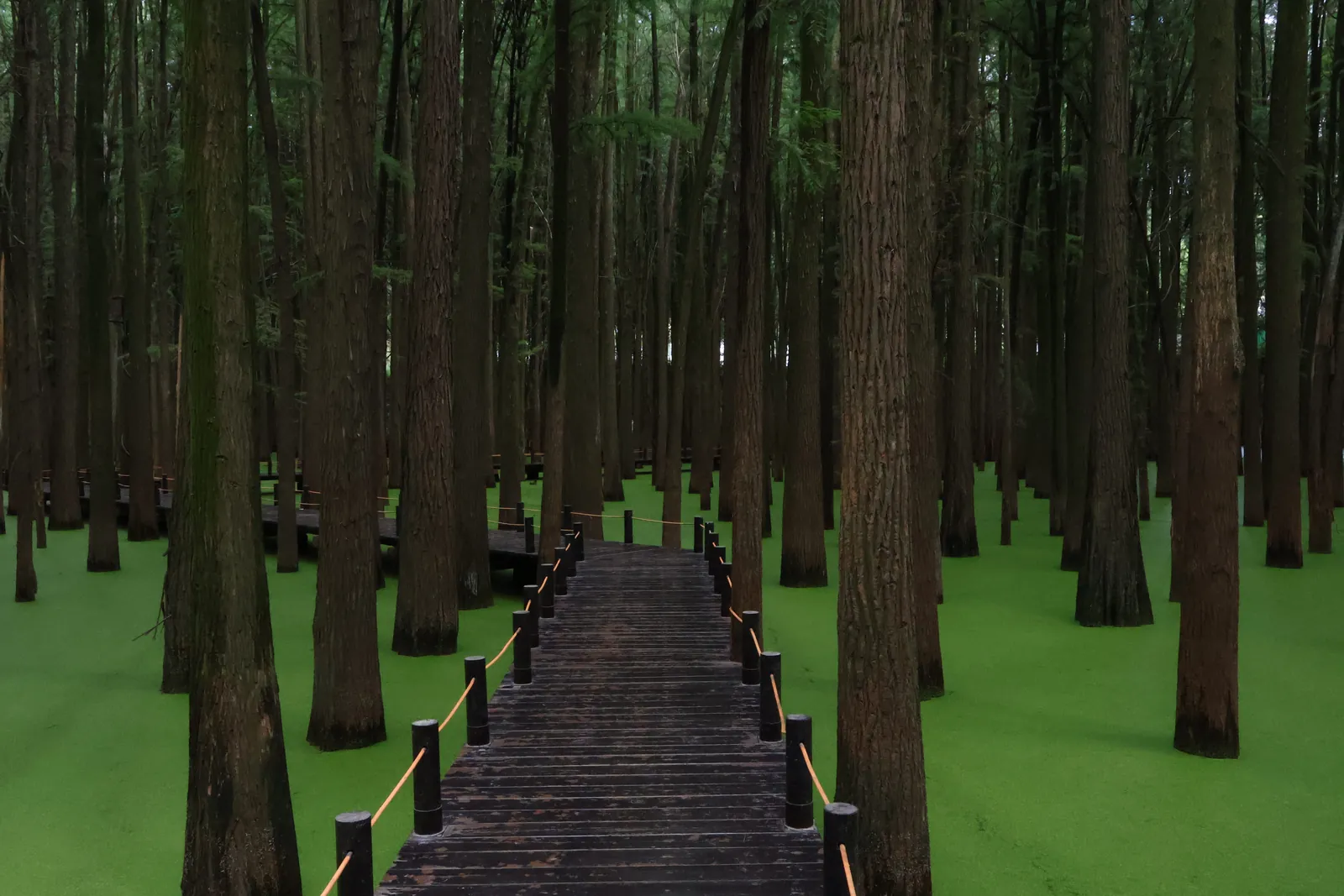
Day 2: Qingshan Lake, the "matcha lake". It's a forest growing out of green water, and you can kayak between the trees. Take a Didi, it's about an hour from the city and it doesn't cost much. The green comes from tiny water plants, so it's best in the warm months. ☀️ warm months⏱ half a day
The café in the tea fieldsWest Lake by boatQingshan Lake
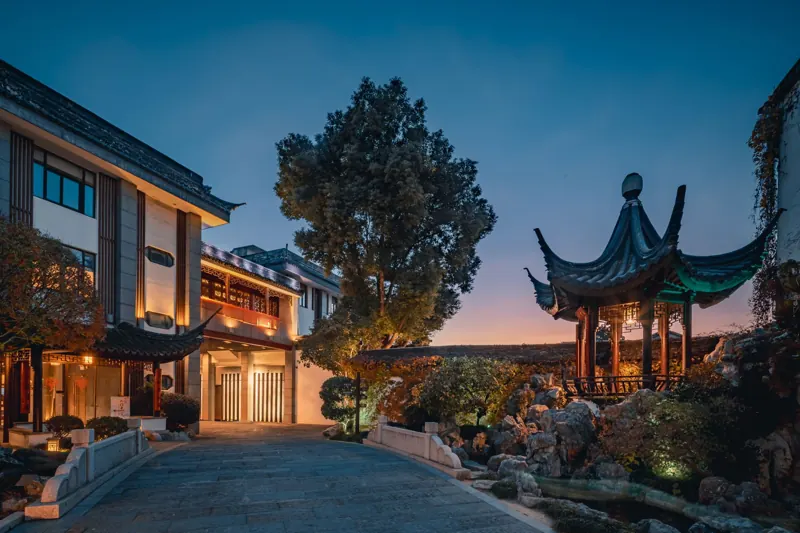
Suzhou is the Venice of China, with canals and old houses right on the water. It's small and easy to walk. Sleep there instead of doing a day trip, the canals are prettier after dark, once the day-trippers have left.
The canals after dark.
Pingjiang Road. Walk along the canal and take the little wooden boat (about ¥40, or $6, for 30 minutes). Go before 9, after that there's a queue.🌅 before 9⏱ 1 to 2h
Shantang Street at night, when the lanterns come on over the water.🌙 at night⏱ 1h
The Humble Administrator's Garden, the most famous of the classic gardens. Beautiful. No need to plan it days ahead, booking on your phone the day before or that morning is usually enough. ⏱ 2h
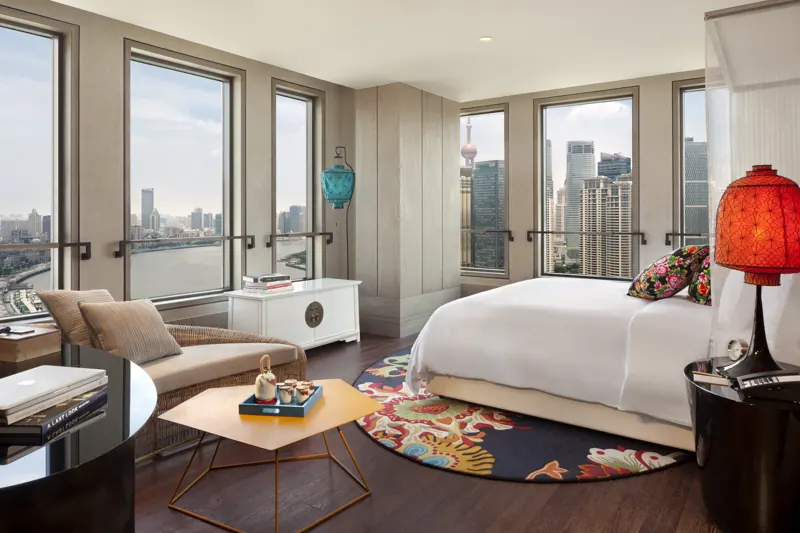
The last stop, and the most international city of the trip. It's huge and modern, and it's the best place to eat and shop. Keep your nicest hotel night and your shopping for here, you won't have to carry bags for three weeks.
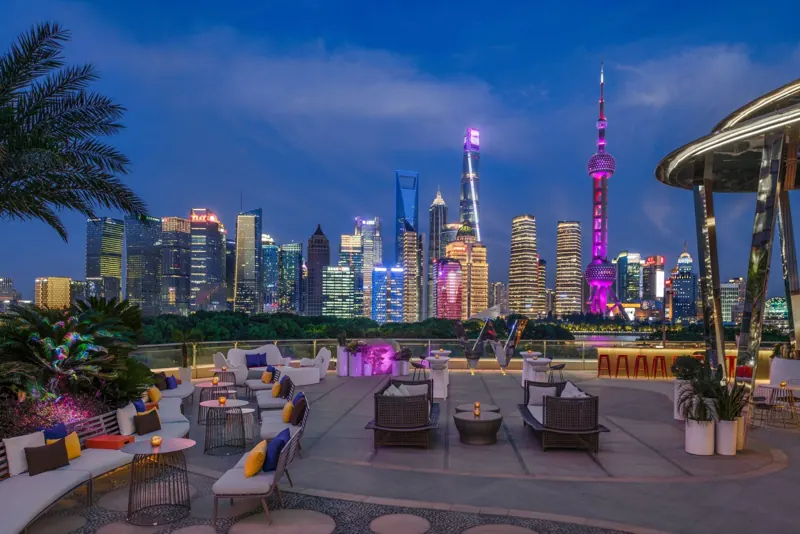
Pudong from the Bund, at night.
The Bund at night. Walk along the river while the towers light up on the other side. Go before 10 pm (11 on weekends), that's when they switch the lights off. 🌙 before 10 pm⏱ 1h
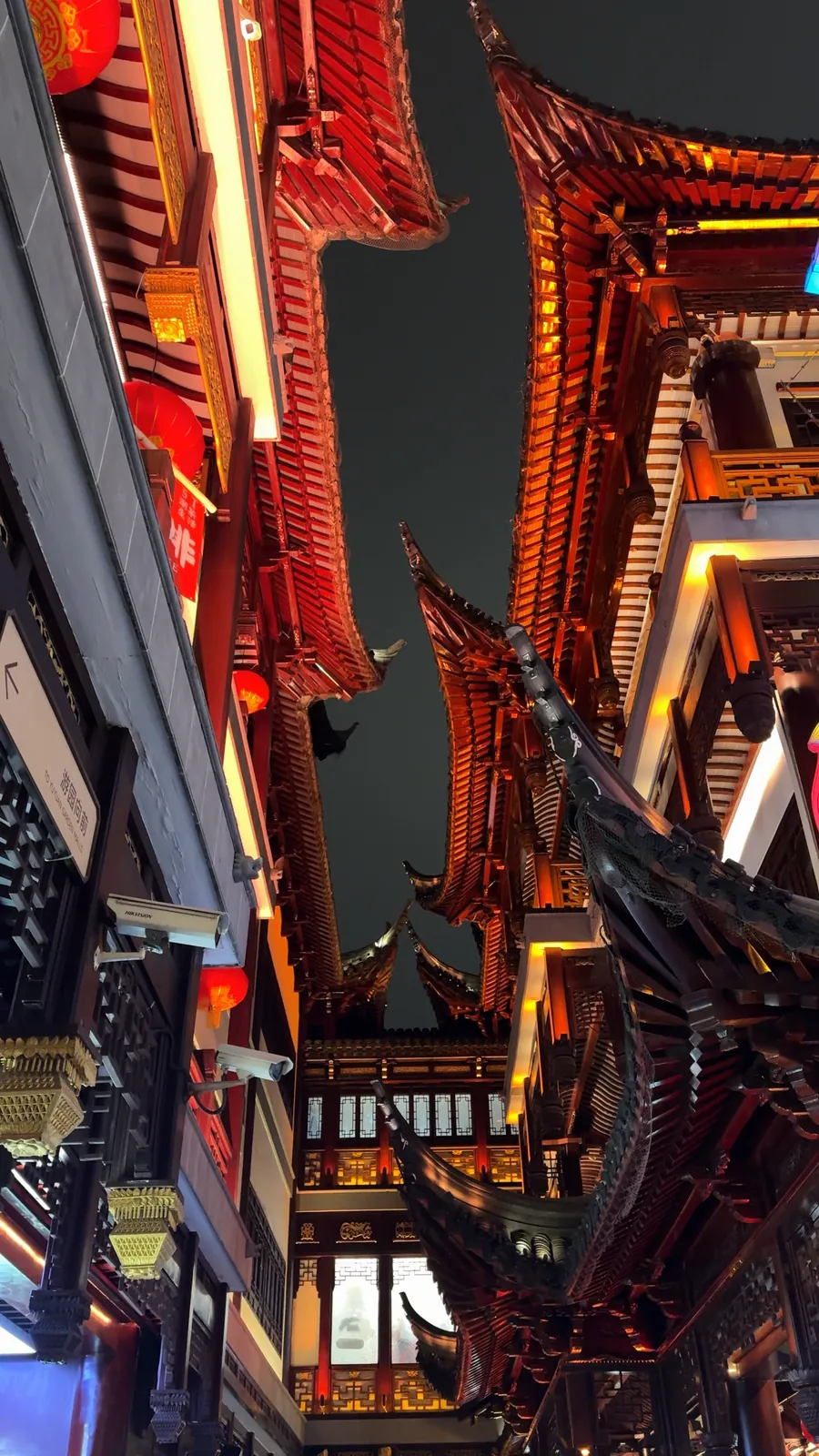
Yu Garden at night, the old town with the curved roofs lit up in red. Packed, but cute. 🌙 at night⏱ 1h
The French Concession for a long walk under the plane trees, some shopping, and a good dinner.⏱ half a day
Tax refund. Spend ¥200 or more in the same store and ask for it. A lot of shops in Shanghai give it back on the spot.
Yu Garden at night
You can't do everything in Shanghai, so don't try. Pick a few things, eat well, go shopping. It's a huge international city, there's a lot of choice.
From most of Europe, the UK, Canada, Australia or New Zealand, no, you get up to 30 days visa-free, until 31 December 2026 for now. Americans still need a tourist visa for a trip like this one, the 10-day visa-free transit only works if you fly on to another country.
Is it expensive?
Less than you think. Count about $60 to $80 a day on a tight budget, $110 to $150 to be comfortable. The hotel makes most of the difference.
Do people speak English?
Not much, apart from hotels. A translator app with Chinese downloaded offline does the job, and trains, metros and Trip.com all work in English.
Are people friendly?
Yes. People are curious and helpful, even when you don't speak the same language.
How do I pay?
With your phone, almost everywhere: Alipay or WeChat Pay, linked to your normal card. Everything is in Before you go.
Will Google and Instagram work?
On a foreign eSIM, yes. On Chinese Wi-Fi you need a VPN, installed before you leave. More in Before you go.
Is the food very spicy?
In Chengdu and Chongqing, a lot of it is. When you order, say bù là (not spicy) or wēi là (a little spicy).
Is it safe?
Very, even late at night.
When should I go?
Spring or autumn. The weather is about the same along the whole route: hot and humid in summer (Chongqing is the hottest), mild in spring and autumn, with a rainy season from mid-June. Early September is a great plan: school has just started again in China, and places like Zhangjiajie are almost empty. Avoid Golden Week (1 to 7 October), Chinese New Year, and July and August. All the dates are in Before you go.
I don't have 3 weeks. What do I cut?
Take one of the short versions at the top, 10 days or 2 weeks. Both skip Beijing.
My China routetravelrached
Free
The PDF, offline
A lot of websites load badly in China. Save it on your phone before you fly, it works without signal.
 Cheap
 Mid-range
 Luxury
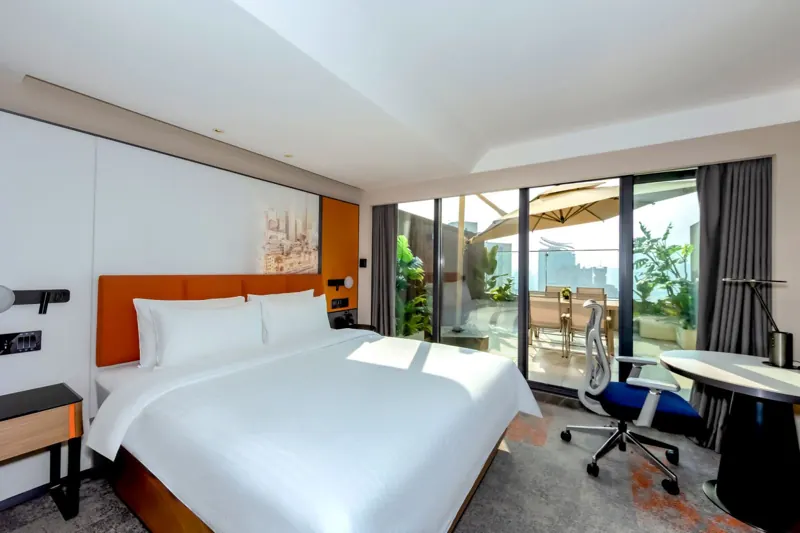 Cheap
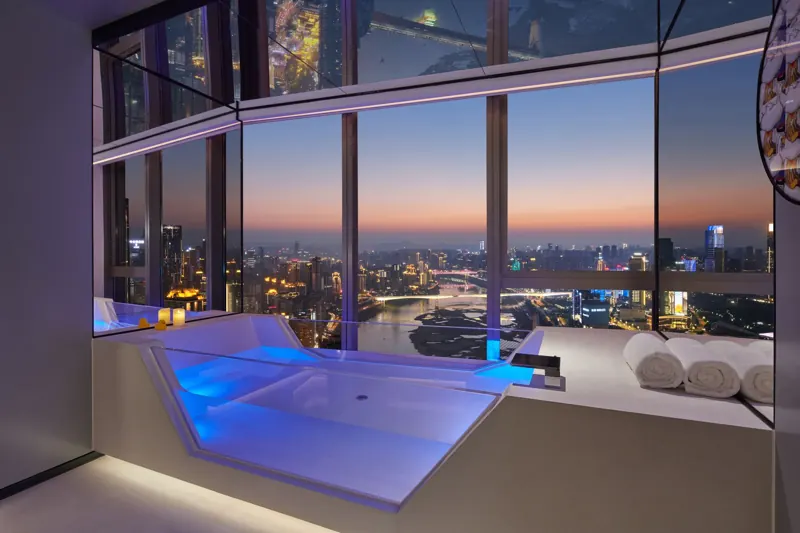 Mid-range
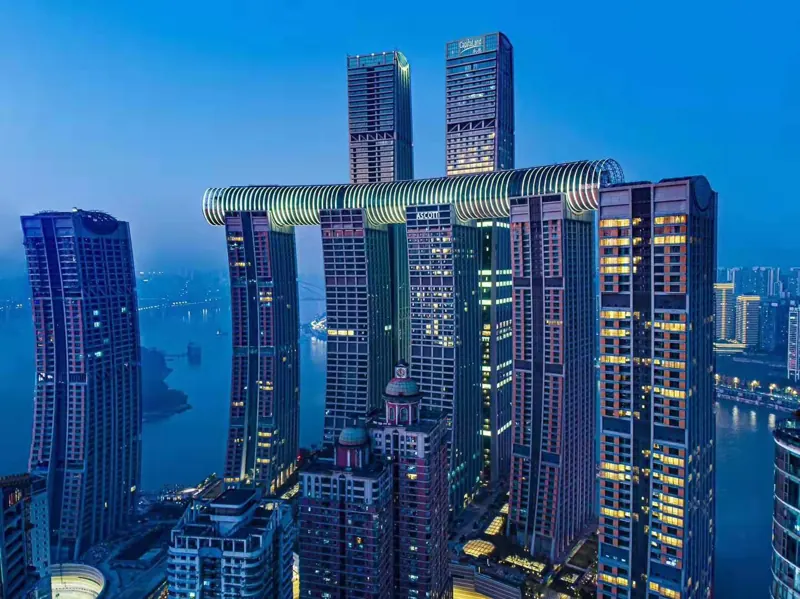 Luxury
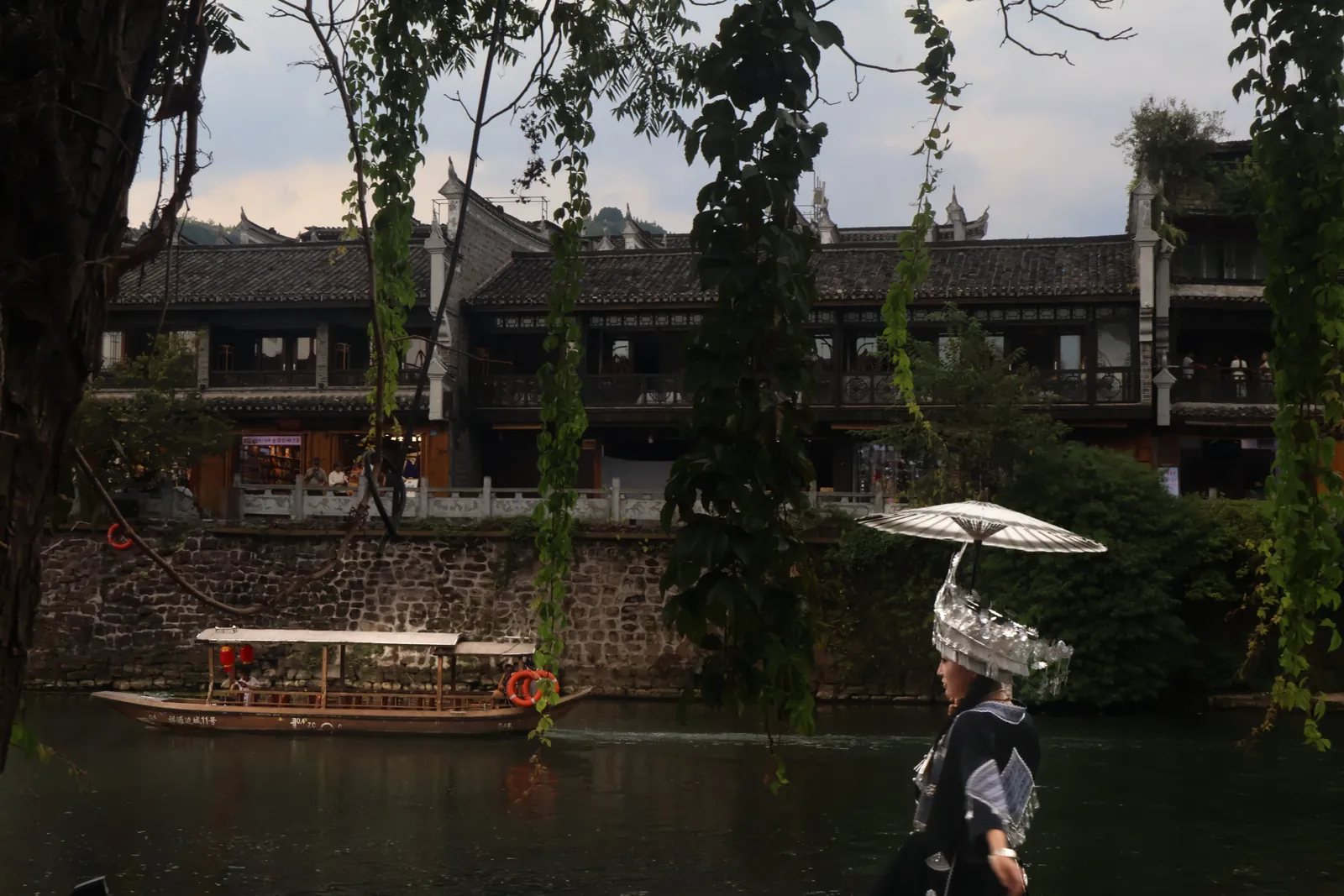
 Cheap
 Luxury
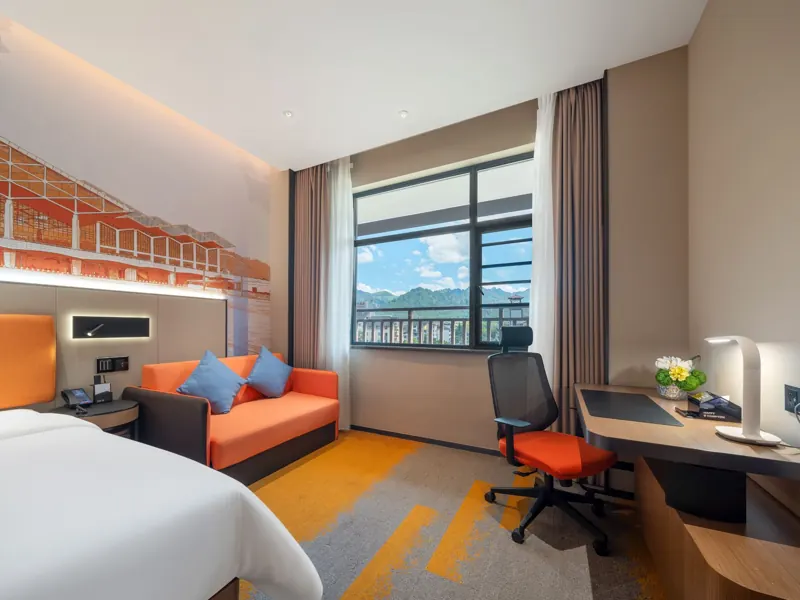 Cheap
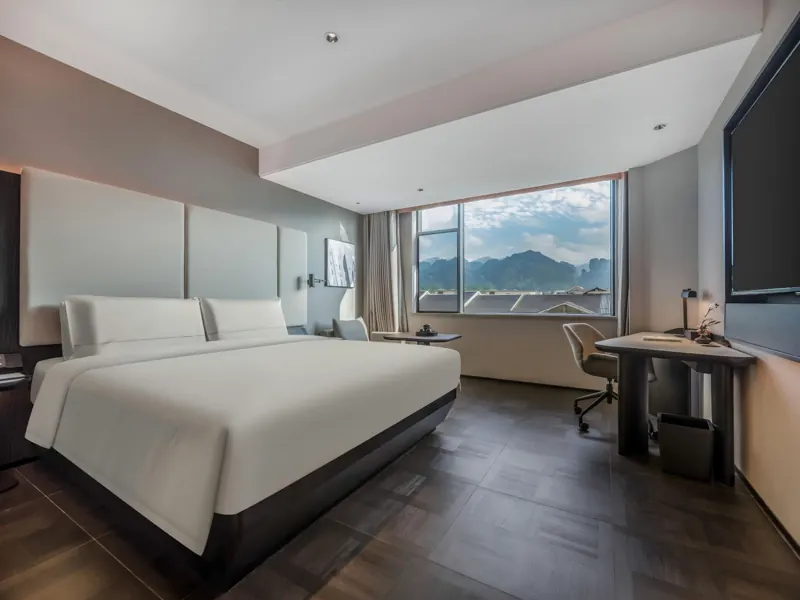 Mid-range
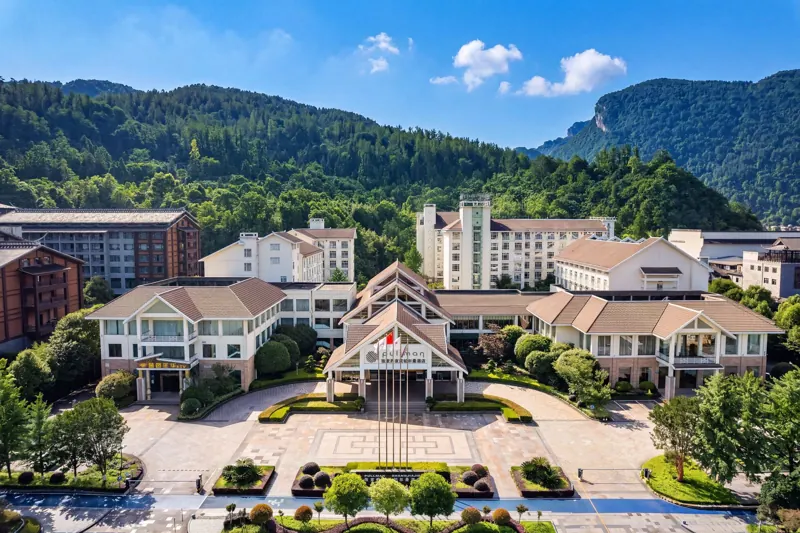 Luxury
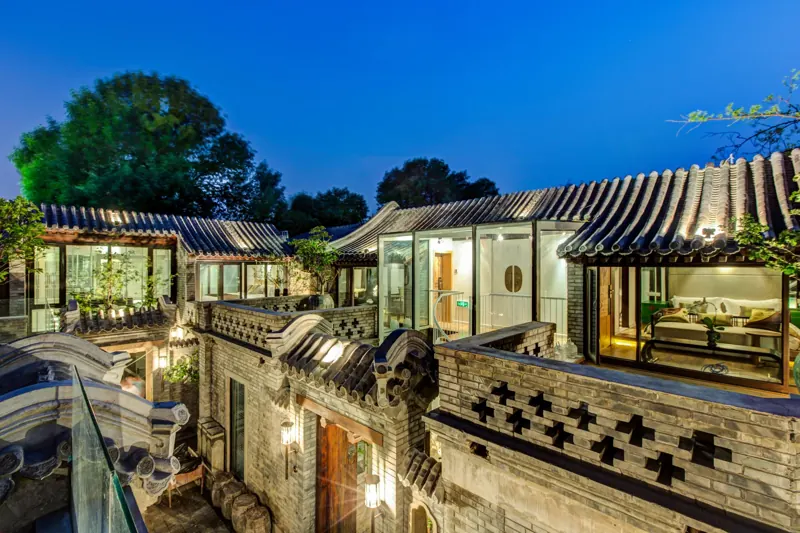 Cheap
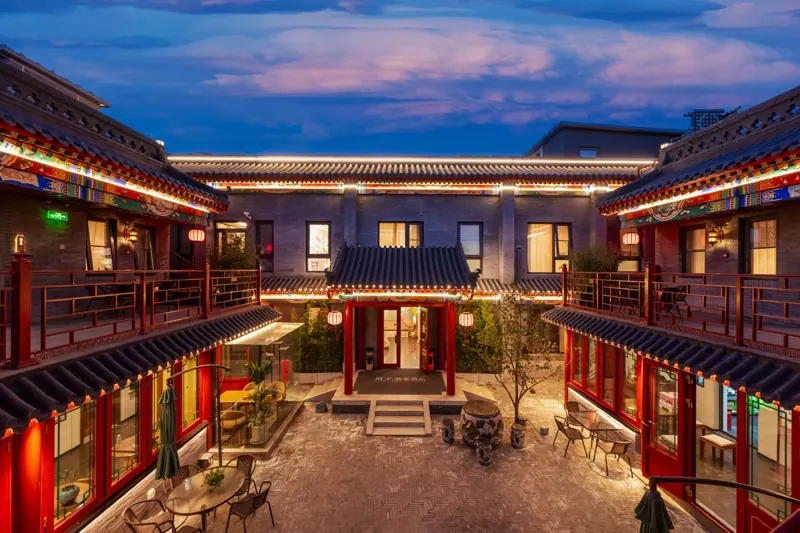 Mid-range
 Luxury
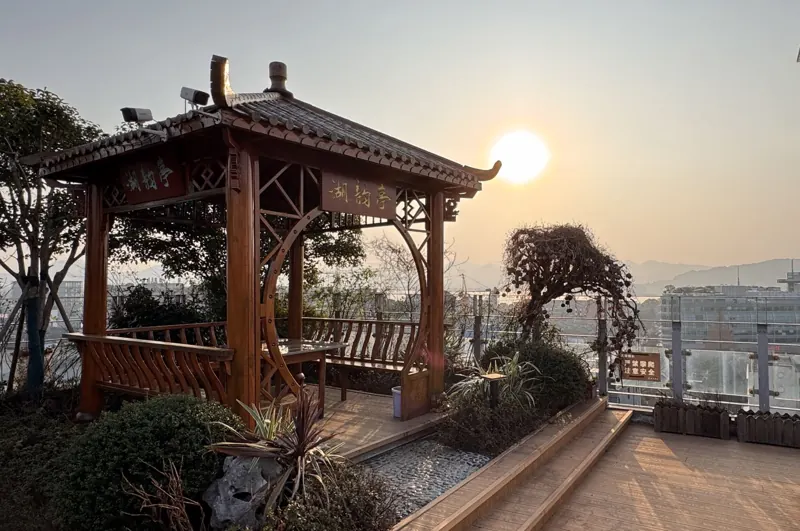 Cheap
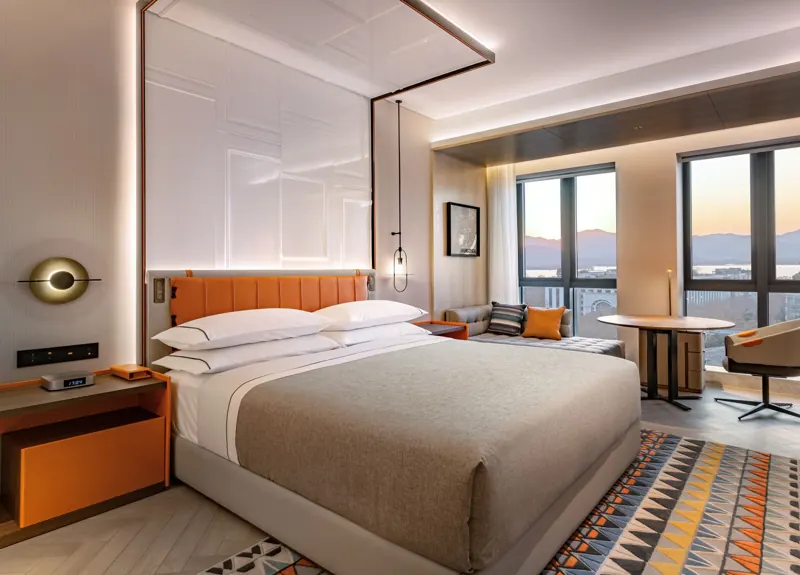 Mid-range
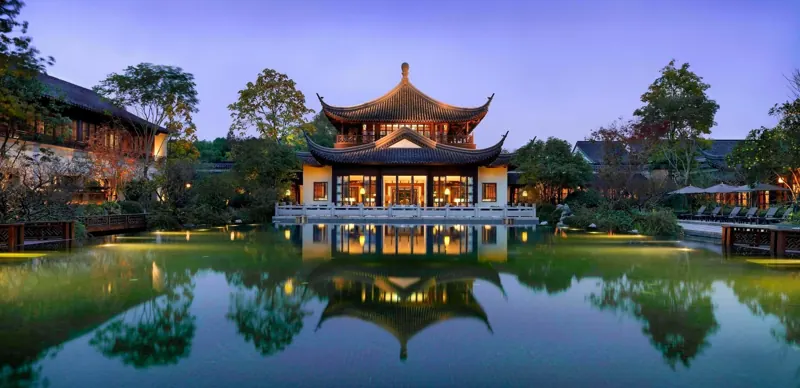 Luxury
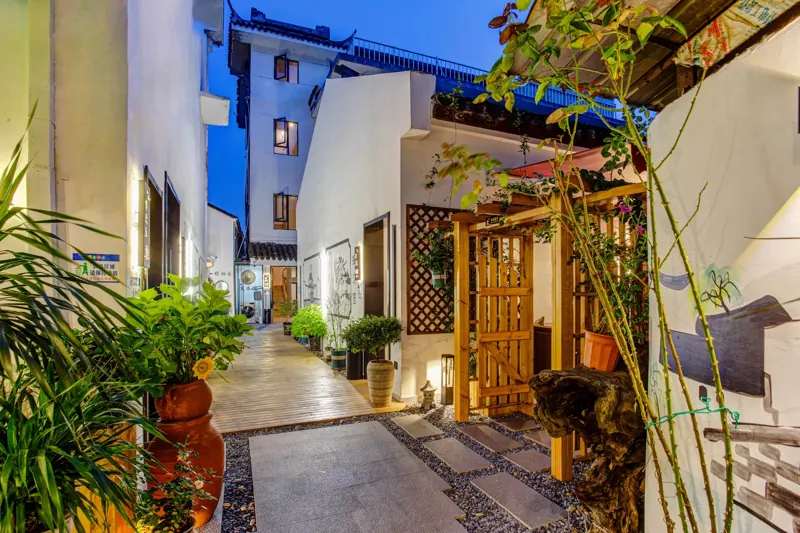 Cheap
 Mid-range
 Mid-range
 Luxury
 Unusual